Tuesday, January 24, 2012

Robertson Davies: Reading and Writing


I've been looking over this book today, a collection of two essays written by the Canadian writer Robertson Davies.  One essay talks about reading, the other addresses writing.  My edition is out of print and the two essays have been included in a later and more extensive publication titled The Merry Heart, a book I may have to put on my wish list.

In addition to writing novels, William Robertson Davies (1913-1995) was a playwright, critic, journalist, professor, and the founding Master of Massey College.  This accomplished man of letters was one of Canada's best-known and most popular authors and I'm sad to say aside from these two essays, I've read nothing of his work.  I do like the way he looks in the photo above, though, with his Hemingway-esqe beard and asymmetrical, bold face.

Sometimes it's very encouraging to read about other writer's experiences, especially if they are confident and wise, as Davies seems to me.  In his "Writing" essay, he offers this:

If somebody is truly a writer, he will find it out and he will understand that if there is any romance attached to the vocation, it is balanced by a number of unromantic circumstances, for the biographies of writers make it clear what a tough and enduring breed they are.

Makes you feel special on a Tuesday morning, doesn't it?

The essays were published in the early 90s, and although Davies hadn't experienced the rise of ebooks and the endless discussions of their impact, he was considering certain changes for readers and writers in the modern, technological age.  With a life spanning the twentieth century, he's a good source for opinions on this.

The visual imagination of the modern reader is much greater than that of his great-grandparents.  It is said, cynically but with a terrible ring of truth, that the modern film is made for viewers with the intellect of a twelve-year-old.  Emotionally and intellectually this may well be true, but the visual imagination of a twelve-year-old today is acute.  If something is happening in a city street, he does not need the street to be set before him, garbage can by garbage can.  He has seen all the city streets he needs on the large screen or the small one.

Twenty years later, for any current writer thinking about things like flash fiction and interrelated short stories, film's impact on books and even metafiction...well, Davies's insights on the craft of writing are still timely.  And if you're growing tired of the "Show Don't Tell" mantra, Davies has further encouragement:

When Henry James said "Dramatize, dramatize, dramatize," what, in fact, did he mean?... I think he meant, simply, that the writer must show what is happening; he must not describe it coldly, as might a bystander.  Things must happen to his characters... But as P.G. Wodehouse - a master of narrative art in quite a different milieu - once said, action in a plot is not simply a matter of the one-eyed Chinaman coming up through the trapdoor and shooting the butler on every page... great novels are psychological as well as physical in action...  To continue for a little longer with narrative, I want to stress my own conviction that it is vital to serious writing.

And so I may not get much done today besides thinking, as I look through this book written by a reader and a writer for other readers and writers.  I'd like to read some of his fiction.  Any suggestions from Canadians or others on which books to start with?

Friday, January 20, 2012

The Saga of THE SHELVES


OK, so it wasn’t exactly a saga. The workmen showed up on time, finished promptly, and did a fabulous job.  And there were boxes to unpack, and so much to do that day (every day) that it wasn’t the tearful reunion I had imagined. I sort of thought I’d sit with a cup of tea, unwrapping beloved books and pressing them to my heart, or something like that. But it’s only been several days later, after the arranging and adjusting, that I’m finally starting to pause before the shelves and see what I’ve got. Because this is really an MVP line-up of books. Several years ago, I went through and gave away probably sixty percent of what I had then. I was beginning to realize that if I continued to keep any book I’d ever laid hands or eyes on, I would never have enough space for all of it. So now I keep books of fiction that I liked very much or loved, or ones I think I may want to refer back to. Same rules apply to other things:  non-fiction, history, religion, whatever. Everything else goes to the church book sale or the used bookstore.

TA DA!


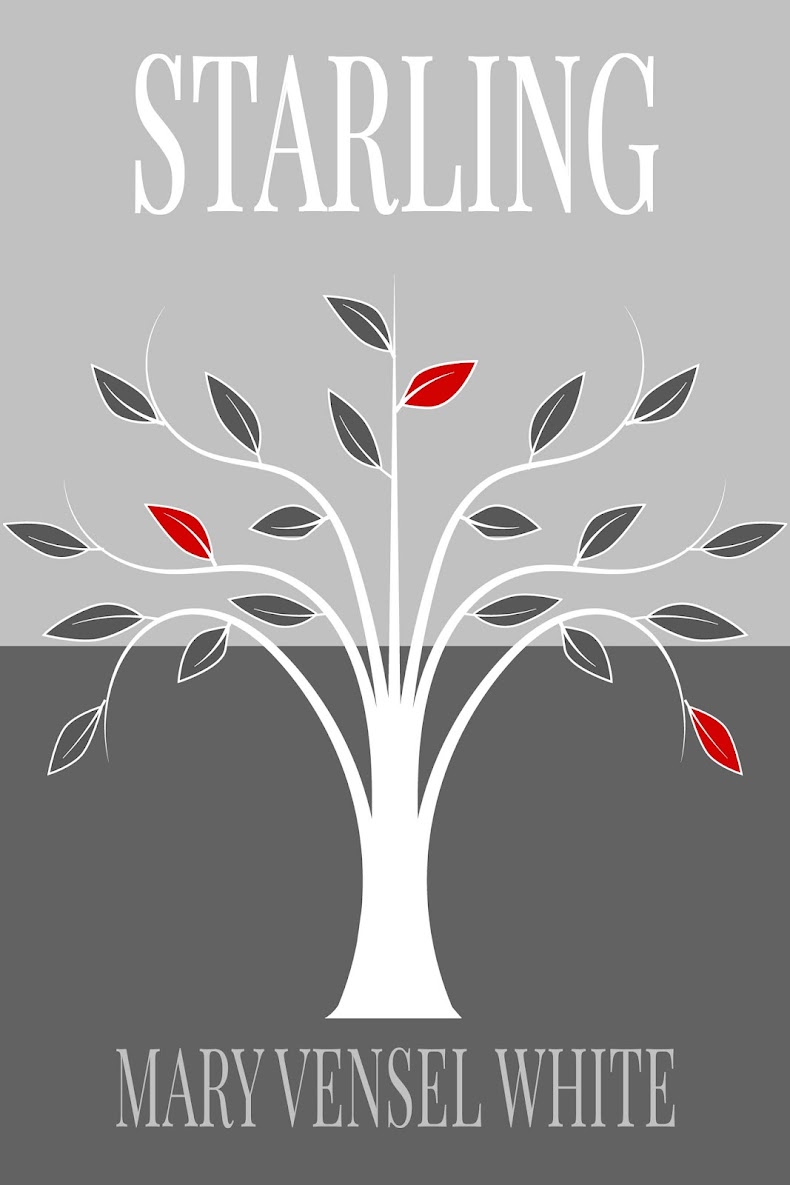
It’s nice to have these books, my old friends, within reach. This morning I pulled this one down: 


I still think it’s one of the best titles ever, and this particular cover is especially evocative. It was nice to look at it again. I also re-read the opening of Plainsong by Kent Haruf, which is just marvelous. So simple, so immediately enveloping. There are books that remind me of certain times in my life, books that remind me of people I know. THE SHELVES are in, and my office is a little less quiet today. And there's plenty of room for more.

Wednesday, January 11, 2012

I get by with a little help...


I definitely benefit from the sagacity and patience of human friends, but I was really talking about…BOOKS. Because what writer doesn’t consider those cardboard-covered missives among their dearest advisors, a most trusted source of solace, entertainment, and yes—friendship!

This week I’m blogging about a small matter, but one that looms large for me. I’m having some SHELVES put in. We moved to our home just over a year ago and because this house does not have a separate office as the last one did, most of our books went into boxes, banished to the attic. Oh, how I have pined over them! How many times did I look to the meager shelf I do keep by my desk, to share a knowing glance with one of my friends, or even to lift him/her from the shelf and flip tenderly through the pages? How many times did I strain my mind for a quote, or wonder about that obscure book, you know, the one by the Australian writer, what was the name of it? And I would picture them, lined up fearfully in their dusty albeit cozy alcove, wondering when they’d see the light of day and of course, me.

Here is the wall, pre-shelved.  A perfect wall for bookshelves, the contractor said, while I nodded and felt ridiculously proud of myself.  (For those who think he said this out of pure salesmanship, I respond:  You weren’t there.  You didn’t hear the sincerity in his voice.)

I do have some books around, of course. The picture above shows one of several “staging areas” around our room, formed in anticipation of THE SHELVES. Mostly things I’ve read recently, reference books, things on the “to read” pile. Because there’s much to decide in terms of preparation for placement on THE SHELVES. Fiction in alphabetical order by author, of course, but Poetry by Religion or in with the Fiction? Philosophy with History or next to Religion (and thereby, close neighbor to Poetry)? Everything on its own shelf???

Installation date, next Tuesday. Stay tuned for more on this exciting process.

Monday, January 2, 2012

Gettin' all American


So I've just spent my first New Year's Eve in Times Square.  Here's what I wasn't expecting:  the crowds were very controlled, very penned-in, actually, quite sedate.  Not the crazy, boisterous enviroment I was expecting, acknowledging of course that we had the most anesthesized of experiences.  No waiting in lines, no true mingling with the masses.  Even so, the effect when we stepped out to catch Lady Gaga's performance (a peak, supposedly) was so contained, I couldn't help but think most parties I attended in youth were wilder than the "Times Square experience."  In earlier, less cautious times, I know things were different.

But at midnight, something shifted.  The countdown began and the confetti rained.  And everyone started singing.  "New York, New York" followed by "America the Beautiful," and then Israel Kamakawiwo'ole's version of "Over the Rainbow."  You know the one, with the distinctly Hawaiian sound, all ukelele and crooning voice.  Listen here.

All of it feeling like a smorgasbord, but an American smorgasbord, confetti falling, shiny and bright, the crowd softened like warm butter, everyone suddenly polite and helpful and grinning.  The sky a blackness obscured by bits of color, fluttering and twinkling to the pavement.  And at that moment, there was nowhere better to be than New York City, in the United States of America.  Really, the patriotism caught me quite by surprise (not something I'm particularly prone to), but it was a nice feeling.  What a spectacular city, I thought, what a wonderful place we call home. 

Happy 2012 to all; may you be happier this year more often than you're not.

Monday, December 19, 2011

Auld Lang Syne

My side of the family gathered this weekend for our annual Christmas dinner and gift exchange.  Great food, much laughter, children once small filling much more space around us.  Maybe partly because of this, maybe partly because of the impending holidays, I've been thinking about the lyrics to Auld Lang Syne all day.  I've discovered that the words to the poem are most frequently credited to the Scottish poet Robert Burns, who claimed he "took it down from an old man."  The title translates to something like long long ago, days gone by or old times.  Many versions exist, but I found two I liked best.  The first:

Should Old Acquaintance be forgot,
and never thought upon;
The flames of Love extinguished,
and fully past and gone:
Is thy sweet Heart now grown so cold,
that loving Breast of thine;
That thou canst never once reflect
on Old long syne.
CHORUS:
On Old long syne my Jo,
in Old long syne,
That thou canst never once reflect,
on Old long syne.
My Heart is ravisht with delight,
when thee I think upon;
All Grief and Sorrow takes the flight,
and speedily is gone;
The bright resemblance of thy Face,
so fills this, Heart of mine;
That Force nor Fate can me displease,
for Old long syne.

CHORUS
Since thoughts of thee doth banish grief,
when from thee I am gone;
will not thy presence yield relief,
to this sad Heart of mine:
Why doth thy presence me defeat,
with excellence divine?
Especially when I reflect
on Old long syne.

Sort of a wistful lament, with extinguished flames and Grief and Sorrow capitalized.  Another version is more upbeat, more what you have in mind when you think of New Year's, with liquor and hopes brimming.  Sure, some of the pint cups have only kindness, but maybe it's a metaphor:

Should old acquaintance be forgot,
and never brought to mind?
Should old acquaintance be forgot,
and old lang syne?
CHORUS:  For auld lang syne, my dear,
for auld lang syne,
we'll take a cup of kindness yet,
for auld lang syne.
And surely you’ll buy your pint cup!
and surely I’ll buy mine!
And we'll take a cup o’ kindness yet,
for auld lang syne.
CHORUS
We two have run about the slopes,
and picked the daisies fine;
But we’ve wandered many a weary foot,
since auld lang syne.
CHORUS
We two have paddled in the stream,
from morning sun till dine;
But seas between us broad have roared
since auld lang syne.
CHORUS
And there’s a hand my trusty friend!
And give us a hand o’ thine!
And we’ll take a right good-will draught,
for auld lang syne.

The song will mean a little more to me this year and the world felt like a small place indeed when I found in my research that an exhibit has just opened at the Morgan Library and Museum in New York, entitled "Robert Burns and Auld Lang Syne."  Click here to read all about it.

In either version, the words honor love, happy memories and sharing the present.  Wishing a blessed and peaceful holiday to all and a hope-filled 2012.
"As soon as we express something, we devalue it strangely. We believe ourselves to have dived down into the depths of the abyss, and when we once again reach the surface, the drops of water on our pale fingertips no longer resemble the ocean from which they came...Nevertheless, the treasure shimmers in the darkness unchanged." ---Franz Kafka