Wednesday, October 23, 2013

A Writer's Holy Days


November is National Novel Writing Month or, for those in the know, NaNoWriMo. The month-long challenge that began in 1999 with 21 novelists has evolved to a much larger production; lots and lots of writers log in and attempt to finish a complete novel (or at least, 50,000 words) during November. At the NaNoWriMo site (http://nanowrimo.org/), you can sign up and update your word count, socialize and commiserate with other writers, even read samples of what everyone else is doing.

But what I like best about this month of writer-mania is that whether you’re participating or not, everyone is talking about it. Which means, everyone is talking about writing. And for thirty days, it’s like the best club ever. Or it’s like Ramadan, or Lent, this group undertaking. And like those religious periods, it permeates your life whether you’re doing what you think you should be doing, or what you’d like to be doing, or not. Maybe you’ve jumped in with both feet, notebooks and outlines primed, ready to belt out that complete novel. Maybe you’re working on something, but can only manage 15,000 words over the course of the month. Maybe you’re not writing right now at all, but you’re thinking about it. Hearing other writer’s stories, challenges, and triumphs can only be encouraging. I like to hear about what everyone is writing and how they’re doing along the way. I like to remind myself that so many writers are out there, quietly plugging away, usually without notice.

I have participated in past years, and will be this year, sort of. Autumn tends to be a productive time for me anyway, so I’ve been working on that story collection, the one I keep saying I’m almost finished with. Well, I really am almost finished now, aiming for the end of October. In November, I’d like to get started on notes for the next thing, a novel of BIG IDEAS I’ve been ruminating over in a very dark corner of my mind. So I may not, technically, be writing in November (according to the NaNoWriMo requirements), but I’ll be in it with everyone who is. Rooting you on, feeling your joy and pain.
Tuesday, October 8, 2013

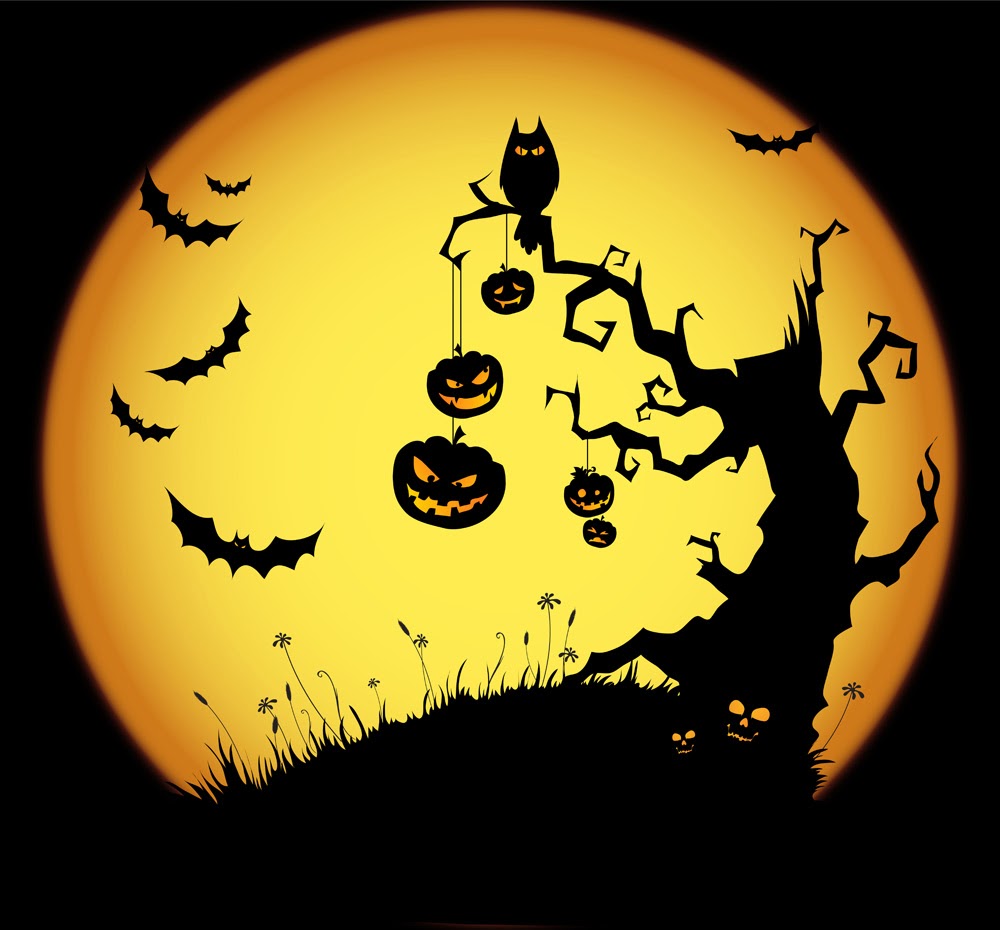
Why I Blame the Irish for Halloween


I was feeling badly about feeling badly about this time of year. Specifically: Autumn, and even more specifically, what has become the month-long build-up to everyone’s second favorite holiday, Halloween. Because I’ve never been a big fan of Halloween. Sure, when I was a kid we had a great carnival at my school, complete with games where you could win cheap toys, a booth for face-painting, and a haunted house manned by the upper grades. It’s the costume part that bothered me. After we graduated past the plastic mask and gown phase of our very young years, during which I was often whatever my brother had been the year before (case in point: Speed Racer), we were left to our own devices when it came to Halloween costumes. You had to find something around the house. There were the standards—hobo, witch, “lady” (which basically involved a dress, socks for breasts and makeup)—and if you were more creative, maybe a cat or a cowgirl. I never really liked donning another identity, though, always found it more embarrassing than fun or liberating. I did enjoy the pillowcase full of candy which, back then, we were allowed to eat however quickly we wanted.

Fast forward: adulthood and then my own parenthood. You’d think that perhaps my heart would have warmed for the holiday but really, it hasn’t. I have found many of our own kids’ costumes, especially when they were very little, completely adorable, and yet, the parties and trick-or-treating with all the sweets and parading around—I don’t know, just not my thing. As they grew older, our kids would start discussing and often, stressing about their costumes way in advance of the date. And it's California--it's almost always too warm for whatever costume they've chosen. Afterwards, there are negotiations and downright sabotage (on my part) in regards to the obscene amount of candy they obtain. Because people nowadays hand out insane portions, not the bite-size candy bars we used to get. But that’s another rant.

I did some reading about the history of Halloween, hoping it might get me in the mood. I had the general gist of it: ancient harvest celebrations merged with Christianity’s All Souls’ Day. This is true. The origins of the holiday date back to a Celtic festival called Samhain (pronounced sow-in). About 2000 years ago, in the area that is modern-day Ireland. The celebration was for the new year, which began November 1, and to mark the transition from summer to winter. They believed that during this transition, ghosts returned to earth and it was a good time for the Celtic priests to divine the future.  Costumes were worn for protection from ghosts, and pranks and games were played.

And then yes, Christianity came and blended in. In 1000 A.D., All Souls’ Day was moved to November 2 in what is widely believed to be a Christian coup to replace the Celtic traditions with church-sanctioned ones.

Halloween made the jump from old world to new but by the middle of the 19th century, it wasn’t widely celebrated in America. Not until the immigrant infusion of the late part of the century, especially the millions of Irish fleeing the potato famine, did Halloween become an American institution. Again, the Irish. Any parent with school-age children knows that now, ghouls and monsters have been replaced with superheroes and celebrities, that trick-or-treating is all about the treating and not really the tricking. Borrowing from European practices, things like superstitions and the wearing of costumes have been appropriated and made into the huge consumer spectacle we have today. 

So do I like Halloween more, having read about its origins? Not really. But here’s a nice little video to get you in the mood, in case you do. The history of Halloween, in a minute:


Monday, September 30, 2013

To Edit or Not to Edit...


“I don’t strike out much. I write on... I do one draft. I do the editing in my head first. I very seldom change paragraphs and things around. I’ve heard that it’s very useful for people who do move things about to have a computer, but it wouldn’t suit me because I just write on.”
 
That quote is from Muriel Spark—-prolific, English author of biographies and novels, a great Dame who died in 2006 at the age of 88. What an organized mind she must have had to be able to edit before setting pencil to paper! She also maintained a stubborn writing process. She did all of her writing with specific pencils in notebooks she ordered specially from an Edinburgh stationer. If only we could all have such willpower and confidence.
 
I attended the Southern California Writers Conference this month, where I gave a workshop on editing. Not the kind you do in your head but the other kind. I like the setting of a workshop because it allows me to share ideas but I always come away with information for myself too. Writers have many different methods, unique strengths and weaknesses, and processes that range from disciplined to haphazard. But we were in agreement about the difficulties of editing. How do you gain the subjectivity you need to be ruthless with your own work? Where do you begin in the process, when the task seems so daunting? How can you cut big swaths of your most evocative and heartfelt scribbles?
 
I have no definite answers. It helps me to separate tasks and keep the writing far from the editing. During the process of writing, it often feels like I’m repeating the same imagery, the same phrases. It’s difficult to ascertain things like pace and progress. So I’m always pleased during a re-read when it seems to make any sense at all. Sometimes, I’m even very, very happy when I read for the first time. But that’s delusional and probably means I need to put it away for several months while I regain my grip on reality, right? Just this morning, I re-read something I wrote and while it had some glimmers of hope, I was apparently having a real issue with verb tense that day. She had done this or that, while he did it, and I felt the need to review some basic rules of grammar.
 
Not a good day for editing, today. Best to “write on.” Save the scrutiny for another day and just keep going.

Wednesday, September 18, 2013

Who Do You Think You Are?

 
There’s a song being played on the “Hits” pop station I’m forced to listen to when my kids are along for the ride (almost always). It’s called “American Girl” and it’s sung by Bonnie McKee. The opening lyrics include this:
“We talked about our dreams and how we would show ‘em all,”
and it got me thinking about John Adams and the American Revolution (as these things do), and I wondered which “’em” McKee’s talking about. Who did a California-born white girl who attended a private school in Seattle and had her first recording contract at age 16 have to “show” anyway, and where did she get this antagonistic attitude? Obviously, in the case of Adams and his revolutionary counterparts, the initial “’em” was England, dominator and unfair taxer of tea, and later, “’em” would be France, the Netherlands—anyone who needed to be showed that we were, in fact, a country and perhaps an eventual power to be reckoned with.*

Later in "American Girl," McKee sings about “taking over the world”—again, I’m unclear exactly how she means this but I’m pretty sure it has to do with money and the Billboard charts. Are we all born with a chip on our shoulder, this distinctly American, underdog persona that manifests as a need to prove worth or dominance? This seems to be a common complaint by non-Americans, our sense of entitlement. Does it help to think that it comes from an insecure place?
 
I’ve also been watching several episodes of a new show called “Who Do You Think You Are?” An overt yet well-made advertisement for Ancestry.com, each hour-long episode follows a celebrity as they discover information about their family tree. Because of my own experiences with searching for family, I’m always interested in this kind of stuff. I like the personal stories, like when Christina Applegate cleared up some family lore about her paternal grandmother and was able to share it with her father, who never knew his mother. But the more historical angles are interesting too, if you can stomach Cindy Crawford being a descendant of Charlemagne.

Several of the celebrities are motivated by a desire to find out something about themselves, some genealogical trace of their own characteristics, some explanation of their talents or inclinations. Kelly Clarkson’s great-great-great grandfather was a Union soldier who survived prison camp and eventually became a senator and she was certain that she inherited a tendency toward “standing up for what she believed” from him. Coming from a family of non-artists, actor Jim Parsons was ecstatic to find a grandfather (six or seven greats back) who was an architect to King Louis XV.

Can we credit non-tangibles to heredity, things like work ethic or artistic leanings? How true are certain stereotypes about nationalities? Are these feelings taught or genetically inherited? I really have no idea, but it's interesting to think about. And I’ve got a strong feeling John Adams would have something to say about it (after talking to Thomas Jefferson, no doubt).


*By way of explanation, I’m currently watching the 8-hour HBO miniseries on Adams and read the biography for my book club. So I pretty much have an Adams lens (WWAD) on everything right now.

Monday, September 9, 2013

Favorite Books on Editing: Mine and Yours


"I have been correcting the proofs of my poems. In the morning, after hard work, I took a comma out of one sentence…. In the afternoon I put it back again.”                – Oscar Wilde

I’ve been preparing material for a workshop on editing for the Southern California Writers' Conference (9/20/13-9/22/13, space still available here), and so, I’ve been doing some thinking and reading on the topic. Over the summer I finally got around to reading Stephen King’s On Writing, a well-respected if untraditional primer which is every bit as good as you’ve heard, and I've been rereading some favorites. All of this poking into the workman side of writing coincided with the arrival of a critique of one of my novels from a respected author; in a general sense, then, editing has been on my mind and recently, how it may or may not need to be applied to the work in question.

Editing is an acquired taste. Beginning writers are appalled by the very thought of it but after time, you learn to welcome and even look forward to the process. Your pedantic, word-loving self should appreciate taking a fine tooth comb to syntactic constructions and your English-major-study-of fiction self might relish all the talk of character development and thematic progression. Who you need to check at the door is your sensitive self. The one who tears up over lovely phrases and heartfelt projections, the one who clings, white-knuckled, to a side story that has nothing whatever to do with the central story because of time spent on research or deep thought or self-congratulation.

This is where workshops, books and advice come in handy. It helps to know we’re all in this together, doesn’t it? One thing I’d love to do in the workshop is share a list of resources. A few of my go-to guides are:

Revising Fiction by David Madden
The Elements of Style by William Strunk, Jr. and E. B. White
Aspects of the Novel by E.M. Forster

...and several more, which you will have to attend the workshop to hear! I'd love if my fellow writers could comment and share your favorite books on writing and/or editing. What books have helped you along the way?  Is there a single guide on writing you couldn't live without? 
"As soon as we express something, we devalue it strangely. We believe ourselves to have dived down into the depths of the abyss, and when we once again reach the surface, the drops of water on our pale fingertips no longer resemble the ocean from which they came...Nevertheless, the treasure shimmers in the darkness unchanged." ---Franz Kafka