Showing posts with label #amwriting. Show all posts

Wednesday, March 23, 2022

Film influences in Starling


Films and books have long held two neighboring places in my heart. As forms of storytelling, they have shaped and influenced me, each informing the other. I warn students of any class I teach that I will be referring, indiscriminately, to all forms of storytelling in our discussions—but what I mean by that is you will hear me talk about books, movies, television shows, Netflix series, songs, theater, etc.


Sometimes, writers are said to write in a “cinematic style” or with a “cinematic perspective,” and that has certainly been said about my writing from time to time. What is meant by this? It could mean the writing provides encompassing and vivid settings that are easy to visualize. Perhaps it means the form lends itself to the shape of film, with abrupt cuts from scene to scene or other techniques. Maybe it just means we can easily picture the book as a movie. For an excellent discussion of cinematic writing, look here.


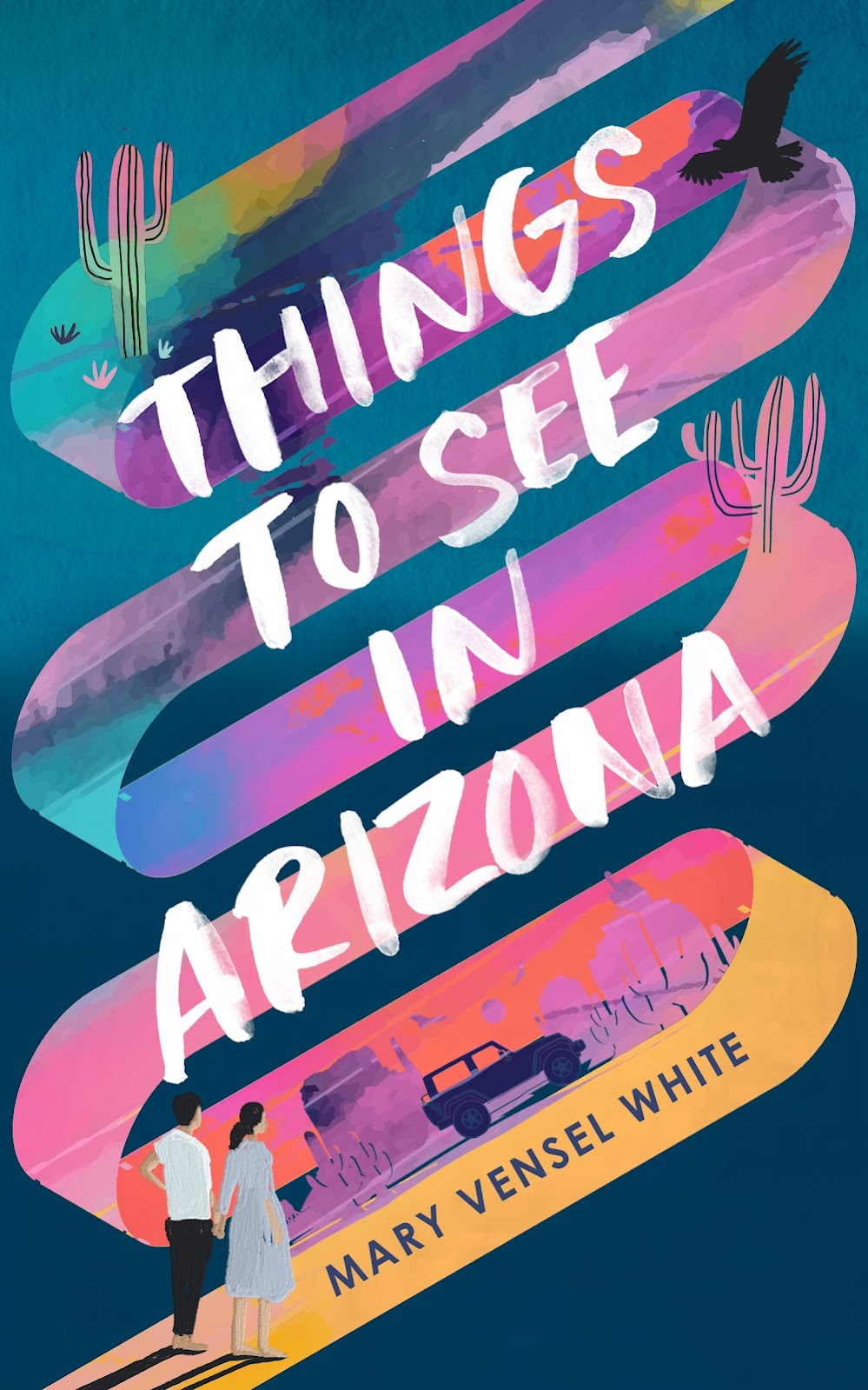
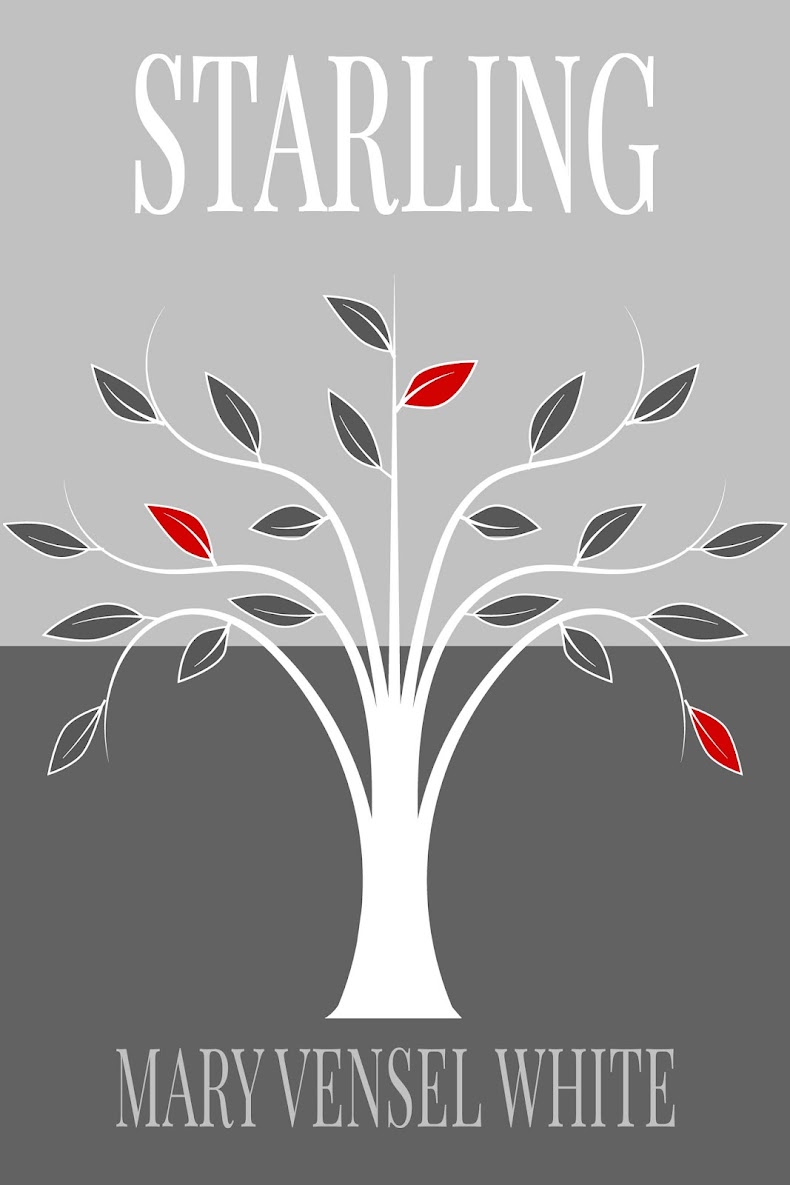
I have a new novel, Starling, coming out in May. I started writing it a long time ago, and it has gone through many iterations. There are—what I suppose you can call—stylistic flourishes in it. I might as well be up front about this. In my experience, most people question or resist stylistic flourishes! Probably a result of our modern times, most of us feeling like we don’t have time for anything other than a direct line from A to B. But in Starling, aside from the main themes and story I wanted to explore, I also wanted it to say something about film, and about how these two forms of storytelling exist amicably for me, side by side.


Like me, the main character in the novel holds a lifetime of images in her mind. Gina has settled into a comfortable routine over the years, and feels her love of watching stories has expanded her horizons in many ways:


“Through television and movies, she had travelled all over. She knew Italy from Roman Holiday and Room with a View, California more from Chinatown and Irreconcilable Differences than her few visits to Deborah in Sacramento. She had digested entire chunks of history by watching television miniseries: twentieth century Australia in The Thorn Birds, the Civil War in North and South.”


Gina may have been influenced by her mother, a woman who named her oldest daughter after the actress Deborah Kerr and who sought refuge in a darkened living room after the kids had gone up to bed.


“Gina remembered a frequent sight: her mother, legs tucked underneath her on the tweed sofa, face lit by a flickering television screen. There was no getting her mother’s attention if she was watching something.”


And speaking of Deborah Kerr, there are certain images, certain scenes you will never be able to budge from your consciousness, once seen. Forward to 3:30 for the good part.

One of the inspirations for the novel was the idea of people creating their own realities. This has been a preoccupation of mine since college when I read Benedict Anderson’s Imagined Communities in a history class. A strange influence for fiction writing, I know, but the idea that nations could be/are formed by the collective imagining of their members—well, this has been something I’ve transferred to my fiction again and again, substituting "reality" for nations, and applying this idea to individual characters and families (even, especially, when “truth” is questionable). I never could have predicted how this basic premise would eventually affect my life, drastically and quite personally, but that’s another story altogether. In this novel, Gina has been living a life of her own making. And sometimes, the life we make can have illusionary aspects. We have so many films about alternate realities now and the ways technology has infiltrated our personal lives but when it came out in 1998, The Truman Show presented something novel—a person whose life ended up being something entirely unimagined. Gina catches glimpses of this movie on a long, international flight.


There are many visual references in the novel but in its first version, the opening scene was a protracted, stylistic flourish: a sequence of downtown Chicago during a storm. I wanted to describe and set the scene as a movie would. Here, the shot of commuters huddling underneath a bus stop shelter, there, cars inching down a drenched street. Then we follow the camera view to a single window in a high rise, where we focus on our hero, standing at the rain-streaked glass. This flourish has been shortened over the many drafts of the book, but the main intent is still there. The thing about images and stories and characters and silky dresses that bounce and glide around a palatial room—these things tend to attach themselves to other images and stories and the impossibility of a boat piercing through a piece of the horizon—and sometimes, something from our subconsciousness is unearthed unexpectedly. And this is what happens to Gina as she stands at that window. She’s been humming the tune from a Gap television commercial all day. It was a popular commercial at the time, in the 1990s, and I wish I could find a version with better quality.


“The song is simple, mesmerizing, and it’s been in her head all day. The visuals: dancers in t-shirts and khaki pants converge and split into various groupings…The dancers are young and happy, perfect skin in various hues. And somehow this song, these gliding forms, are tied to a memory of Gina’s father, talking about Elvis at a dinner party.” 

 And so it goes, memory tied to memory, images linked to others.


Monday, May 27, 2019

More Considerations: Form in Fiction


I recently read a book about narrative form. Wait, don’t stop reading! The book is Meander, Spiral, Explode, by Jane Alison, an author and writing teacher. Her premise is fairly simple: the traditional story arc is a limited way to imagine the creation of fiction. Why not use other patterns, those found in nature and all around? Why not meander through the text, exploring side alleys. Or maintain a bit more focus, with a plot that spins in a spiral around a central point. Or construct a narrative in which “a powerful center holds the fictional world…tightly in its gravitational force." In other words, an explosion. Alison takes us through a variety of patterns, with examples from literary history and with an eagerness for discovery and creation. For a good summary of the book’s argument, read this.


I marked many passages while reading Alison’s explorations, but one stood above all others:
 

“The point now: Sebald’s Emigrants was the first book to show me a way beyond the casual arc to create powerful forward motion in narrative: motion less inside the story than inside your mind as you construct sense. This motion involved pattern, arising (I later learned) ‘from the spatial interweavings of images and phrases independent of any time-sequence of narrative action’ (Joseph Frank, ‘The Idea of Spatial Form’).”
 
Aside from the text mentions, what she’s talking about is that sense of figuring things out, that exercise of filling in white space with what your conscious (and subconscious) is absorbing as you read a story. Plot and character clues, yes, but also the building of elements such as repeated imagery, or the deepening of meaning when a phrase is repeated or used at pivotal moments. Stuff like that. Think about when you’re reading a mystery and something suddenly becomes apparent. A lightbulb moment. That feeling, only it’s about the entirety of the thing you’re reading.
 

And it occurs to me that this has been a preoccupation of mine from the first moment I began to write. My autobiographical first novel, about the experience of being adopted and finding my biological family, was written from the POV of three different women, each with their own story stemming from that event—the adoption—and how it shaped their lives. Alison might call that a radial, or explosion. The second novel I wrote was called ”Good Sunday” and although I did imagine a structure for it, roughly related to the Catholic Church’s Stations of the Cross (don’t ask—I was young!), this novel takes place over the course of the day and really is probably a meander, as it unifies the story and characters through a series of seemingly random events and imagery. In my third finished (and first published) novel, The Qualities of Wood, my initial impulse was to write a book that seemed like a mystery—with a dead body and cast of possible suspects—but surprise!—the real mystery would be the slow revelation of character, which would sneak up almost imperceptibly as the main character thinks she’s actually solving something else. (A note: as it turns out, readers of mystery, by and large, are not thrilled with a book that pretends to be a mystery but actually isn’t).
 

And I’ve yammered on and on this year about my most recent book, Bellflower, which is certainly my most obvious experimentation with form. I won’t say more since I’ve already said plenty, but you can read about its form here.
 
I think anything I write moving forward will start with a consideration of form. If you had asked me where those past projects began, I might have said things like setting, or character, or—in the case of yet another unpublished, untitled novel I wrote after TQOW—an idea. Form is something I deal with as a writing teacher, when I point out the traditional arc structure, show examples of novels that effectively employ it, and then, those that effectively don’t. All of teaching (and learning) about writing seems to follow another type of pattern: Here is what has been written already. Here are some “rules.” Here are things that follow the rules and are wonderful. Here are things that don’t, things that were a deviation and a surprise and yet, are equally or even more wonderful. What’s better than stumbling upon a new, unpredicted path? Writers have always pushed against constraints; form experimentation is nothing new. But flexing your creative muscles with new types of training is always a good idea and form is a good place to start.

Friday, March 29, 2019

100,000 Views: A Retrospective

I began this blog in October of 2010, at a time when I was beginning to envision myself as a writer. Sure, I had always written—had finished a few novels, even—but this is when I decided to see if I could make a go of it. Get actual people to read my writing, maybe get published. I dug around online for resources. I joined Facebook. I started this blog. And soon, I will have had 100,000 views here, which is certainly not in the range of many viral things you hear about but for me, it feels like a nice milestone.
 
During these 8 ½ years, I’ve written 303 posts. My most prolific year was 2014, during which I posted 51 times, followed closely by 2011 with its 50 entries. In 2016, I only blogged nine times. It’s easy, in retrospect, to recognize the reason for this scarcity: a very tough personal year. 2018 was the same: only 13 posts.
 
I wrote about dance and art, about current things happening in the news and routine, day-to-day events and observations. I worked out conclusions about the writing process, penned memorials for both people I knew and knew of; I wrote about television, movies, songs and poems I liked. I started a series about forgotten novelists with the intention of making it a regular feature, but it petered out after two posts. I began a long-running tradition: Poem for the Weekend, in which I’d share a new poem and info about the author. This feature ran for almost a year beginning in August of 2014, and was reprised briefly in 2017. I wrote about writers and books, of course, sometimes book reviews, sometimes analysis of theory or craft; infrequently, I shared fiction of my own. I wrote about my kids, and published their book reviews of my first novel. I wrote about the writing process, about things that inspired me and about the gifts and pressures of the creative life. And in December of each year, I shared my favorite films and books, until a few years ago when I quit doing the film list. The books are easier to track and so I still do an annual roundup. My most recent post (and only one so far in 2019) talks about my method and inspirations for my new novel, Bellflower.
 
So. At this milestone—100,000 views—I think it would be a good time to look back and remember what I’ve done here, at this outlet, and to maybe set a course forward. I’ve chosen fifteen posts that stood out to me, for a variety of reasons, and I present them to you here. It would seem that these writings of which I’m most proud or which touched something in me fall into five categories: Inspiration, Creativity, Writing Life, Personal, and Memorial.

Inspiration


A brief contemplation about one of my favorite prose passages of all time.

Focus and Layers – 1/27/15

Notes on a piece of art I saw at MOMA one time, and how it stayed and stayed with me.
 

A discussion and appreciation of the mastery of McCullers’s characterizations. She is a huge influence on my work.
 

Creativity


A prose poem sort of thing, about feeling isolated and small, and at the same time, connected and complete. Reading this now brings back the exact moment and feeling in stark relief.


My most-read post of all time (3406 reads), this is where I shared my thoughts on O’Connor’s essay collection, a must-read for writers.


A brief post about the genesis of a short story, eventually titled “Driftwood,” which will be published, finally, this April.


For the past few years, considerations of form and genre have been at the forefront of my creative endeavors, and this post speaks to that.


An imagined conversation between “I” and “them,” this post could easily be filed under the Personal category as well. Another entry which brings me back to a specific feeling and time.

Writing Life


What happens when you get, perhaps, too much feedback on your writing.


Some thoughts on why a tendency toward melancholy is a gift and a curse for writers.

Personal


I know I said that O’Connor post was the most-read, but this one I also posted on Medium, where it picked up over 11K views. Combined with the views here, it has over 13K to date. It’s the story of the time my sister acted as surrogate for a couple in China.


I’ve had many losses in the past few years and unfortunately, learned a lot about grief.

Memorial


When Neil Armstrong passed away, I wrote about my grandfather, who knew him, and about the Six Million Dollar Man.


Going through my grandmother’s belongings, we found some papers pertaining to a trip she took with her nurses’ association. I wrote about it here.


The post I most wish I hadn’t written, the eulogy for my mother, who passed away last year.

Dear readers: I appreciate all of your comments and feedback over these years. I was hoping to come to some conclusions through this process of looking back, and I think I have. In the next couple of years, I have plans to finish two novels, and I think what I miss doing most at this blog is writing about books. Other writer’s books, and the ways they inspire, disappoint and confound me. So look for more book reviews here, maybe. I’d also like to expand the types of things I’m reading. I’d like to get back to reading more biography and history, maybe even an occasional memoir, YA or spiritual book. Lastly, I’d like to read thematically—several books on a topic or theme. And I think I already have an idea for a summer reading project along those lines, so watch for that as well.

Monday, January 14, 2019

Life in Moments


When my grandmother—my mother’s mother—was dying, she was in and out of consciousness, not always lucid, and she often confused my mother for other people from her past: her own mother, a cousin, one of her sisters. She said things that must have come from memories and had no place in the present. And although sometimes my mother seemed hurt when she wasn’t properly recognized, I found my grandmother’s jumbled mental state—a series of moments, people and places, in no determined order—well, I found it to be of some comfort. It’s what's meant by “her life flashed before her eyes,” the most indelible moments rising up to illustrate who you have been.
 
Long ago, I had a wall hanging that said “Life is not lived in hours, days, or years, but in moments.” And I thought that to be a very deep concept, and I still do. Think about when you meet someone at a party. You don’t sit down and begin a linear introduction: Hello, my name is Mary and I was born in Los Angeles…. What organically happens with people is that we find things in common and we tell stories about our lives. For almost two decades I have been friends with a certain woman who recently told me something about herself I had never known, something that seemed so fundamental I couldn’t believe we had never discussed it. Such are life, and people, and the ways we can know them or never will know them.
 
I’m telling you all of this in a roundabout way of talking about Bellflower, my “novel-in-moments,” which will be published next month, and to perhaps give you some help if you decide to get a copy of the book (thank you!) and might be perplexed by its form. These musings about life and its moments (among other things) pointed me towards the method of the novel. But let me give you an illustration of what I mean.
 
Let’s say I want to tell you about a character, a person. I’m making him up now, as I type this. His name is David Price. I will tell you five brief things about him, five moments from his life. 

1.      When David was 41, he had a nervous breakdown. He was out of work for two months, and along with therapy and medicine, he took up woodworking. He made beautiful wall-to-ceiling bookshelves for the den in his house.
 

2.      David’s mother often tells the story of when he was four years old, and she came into his room to find him arranging his picture books into straight columns and rows on his carpeted floor. He explained the ordering of them, which had something to do with animals and also, children with and without both parents.
 

(Now, I’ll take a pause here to ask whether you are already drawing some inferences from these facts? Perhaps that David was an orderly sort of guy and maybe his breakdown had something to do with his sense of order, or perhaps from missing a father? This is the way our mind works, filling in the white space when we are given clues.)
 

3.      For David’s 70th birthday, his three children threw him a surprise party. He’d been quite antisocial for many months after the loss of his wife of 41 years; he hadn’t been in his wood workshop, or reading, or going to the gym regularly as he had most of his life, and they hoped to cheer him up.
 

(Are you thinking: Oh, good, he had a nice wife and a full life, despite that breakdown? Or did he? How did the wife handle his mental state? And were books a big part of David’s life?)
 

4.      When David was 54, his book about Vietnam was published by a university press. They threw a launch party for him but he was unable to attend when he developed a bad stomachache. David’s father had died in the war, and David had majored in history, eventually became a history teacher, because of this fact most likely.
 

(And now we have a timeframe, and can fill in some details about when David was born, etc. We can start thinking about what it meant to grow up without a father, the breadth of this loss.)
 

5.      David met his wife, Jeanette, at a faculty party, when he was 28. She was a science teacher, environmental. He brought her a glass of wine and told her about his mother’s recent marriage to a pastor. She asked if David believed and he said he’d have to think about it.
 

(Ah, this Jeanette. A scientific sort of person, serious and straight to the point. How did they counteract each other? And the mother remarried—how did this affect him?) 

Five moments and somehow, a pretty full sketch, at least, of David Price. And this is the method of Bellflower, which tells stories from the lives of three main characters and the family and friends in their orbit. The moments and stories can range from a few paragraphs to many pages. You may read the chapters, and the sections within them, in any order. And there is white space, plenty of it, and sometimes the characters reach across it to touch each other. I hope, if you decide to give the novel a go, you’ll let me know how you decided to read it and of course, what you thought.

Friday, November 2, 2018

Where Writers Live


Let me tell you something about writers that you may not know. And by writers, I can only speak for those of us whose main commodity is human emotion. Other writers—those who deal in history, or intricately woven plots, or fantastic, created worlds, or other goods—are certainly appreciated neighbors, but for my purposes today and what I’m going to tell you, I’m speaking of writers whose primary and main obsession is people, and what they think and feel.
 
We live in houses, all of us. The houses were built by blueprint, or piecemeal, by necessity, and the framework of each is comprised of memories and stories. Note: these two building materials are scarcely discernible from each other most of the time. We can hardly tell them apart ourselves. They’re both strong, though, and keep the roof over our heads. Our houses have windows, of course, but we can only look out. You can try to look in; you can put your face right up to the glass and strain, and you may catch a glimpse of something shadowy, but that’s about it. We like the windows but sometimes forget they are there. In fact, we may shut the blinds for hours, days, weeks at a time. We like the dark in our cozy house. We are fine; don’t worry about us.
 
You may have noticed that every so often, we swing the windows open, propping each with a piece of wood chiseled from the frame. We let some of the musty air from the house out; we take some of the fresh breeze into our lungs. On special days, sunshine streams into the windows so brightly, we have no choice but to dance. Often we need a period of closed windows after these events.
 
Next to our houses runs a creek. Yes, next to every house, all of them. The official name for this creek is Melancholia—that’s what it was called long ago when such things were named—but I’ve heard it called Sentiment, Sadness, Sorrow, and many other names starting with other letters too. Our friends and loved ones may whisper “Crazy Creek” to each other, but we know they mean it with love. It’s a gentle creek most of the time. Within our houses, all the time, you can hear the low murmur of rushing water, a sound we usually forget is even there. We like the creek, though, and feel it even when we don’t know we are. On occasion, we confront it straight on. We go outside and get our feet wet, step right in and let the cool water up to our knees, our waists. Sometimes, we lie on our backs and let the water rush over us; we like the way the world looks through this blur of watery movement.
 
Once in a while, a storm comes, the water rises, and the creek floods into our houses. We’re used to this and in some ways, welcome it. You can still visit during these times. You may not want to, and we understand that too. If you do come by, we’ll welcome you right in but you should be aware that we may be busy rushing from room to room, filling buckets. We may not have time to talk, or much to say. We do appreciate you stopping by though.
 
Why did we settle in houses next to creeks that flood? You might as well ask why some choose to live in the forest where wild animals dwell, why this old woman prefers the hot desert and that young man the boisterous city. Without the creek, we wouldn’t appreciate dryness nearly as much. Without the creek, we wouldn’t feel connected to people in other houses, next to other creeks, or even to the man in the city, or the woman in the barren desert. We like the creek. We like to rest in our beds at night, hearing its music, imagining its path, surviving its chill. And then we get up and try to remember all of it for those of you in the forests, next to farmland, in high-rises, where perhaps you can’t hear water at all, or have forgotten to listen.

Wednesday, February 28, 2018

Writing Affirmations


Tell yourself you’re doing it for humanity. Teeming, varied, rushing life. What binds us here in this place? What makes us pass each other in the street and pause, looking into another’s face to notice: I see you. I understand. Something like that happened to me. I felt like that once.
 
We don’t always get it right. Sometimes the right word, the right phrase, slips through our grasp, bobbing and submerging into the green stew. We try. We describe its slippery surface, the feel of it. We gaze into the murky depths, looking for clues, for context.
 
Testimony: evidence or proof provided by the existence or appearance of something.
 
It’s important, what you do. Never lose sight of that. That a-ha moment, empathy, recognition—these are the best parts of humanity. It’s wonderful to be loved but oh, to be understood.
 
Keep at it, scribes. What you do is important. Not everyone has the patience to stop and look, to try to articulate what it means to be here, right now. Pen to paper, fingers on keyboard, keep gazing towards the horizon, continue excavating memory, and feeling, and hope. Spill it out, profess, recite. What you do is important and so necessary.  

Sunday, February 11, 2018

On Currents and Writing and Focus


For the past few days, I’ve had an image in my head of a flowing creek, with a large but smooth rock sitting right smack dab in the middle. Currents flow around it, the water streamlined and purposed; this implacable boulder gives the appearance of being, by all rights, an integral part of the flow rather than an obstacle, as one would tend to think of a huge rock in the center of a moving path.

I didn’t come up with this image in a vacuum. Recently, the writer Lauren Groff tweeted about celebrating her 20th anniversary of “taking writing seriously.” She clarified: “By taking writing seriously, I mean that a thing happened that made me decide to make writing the immovable boulder at the center of my life. Everything else—family, friends, other work—has to find a way to flow around writing.”

Have I done that, I wondered, either consciously or subconsciously? In the creek of my life, what does writing look like and has that been working for me? This image stayed with me, her words lingering until I was forced to come up some vision of my own stream, my own boulder. And what I think is that for me, for now, writing is more like a collection of smaller rocks, haphazardly arranged. The water still flows, around and over these less-imposing obstacles, but it’s harder for a person to navigate, should she choose to swim or walk downstream. If she had a small boat—a canoe maybe—it would be very challenging to steer a clear path.

If your stream looks like mine, others can visit and they will experience it much like you do. They, too, will have a hard time navigating around those smaller, randomly-placed stones. But if there's just the one, large boulder, if you have made writing a central, essential part of your stream—well, that’s pretty clear, isn’t it? They can see what to do, how to proceed.

One day, I’ll have to put on waders and some sort of sturdy backpack. I’ll have to gather those smaller rocks and stack them in the very center. Over time, with any luck, this mound of craggy stones will become smooth and unified by the currents. And if I’m very, very fortunate, the new, imposing structure will be big enough to climb and rest on, high enough to see around the next bend or further towards the horizon, but still low enough to dip my toes in, allowing for an easy transition back into the water.

Wednesday, August 9, 2017

Changing Currents


The Greek city of Chalcis (also known as Chalkida) is built on the two coasts of the straight of Evripos. As such, it’s a city of water and bridges. Perhaps the most famous is the sliding Negroponte Bridge, where tourists gather to watch the tidal phenomenon that has made Chalcis famous since ancient times. Here, the currents reverse direction every six hours. The water flows from the north Evian Gulf to the south for six hours, then becomes still for approximately eight minutes, then reverses direction. Because the currents can reach up to nine miles per hour, the churning visible from the bridge earned the nickname “mad waters” or “crazy waters.” The flow of the currents is entirely dependent on the moon and is directly connected to the duration of each lunar month.
 
There’s much to contemplate about this natural occurrence—scientifically, nautically, philosophically. Maybe you can relate to a time when you were between acts and seemed to be spinning endlessly, or stuck in a dormant lull. From all sides, the competing pulls of inspiration and obligation, as you churn in place, deciding. Or, an ominous surface as smooth as glass, too lacking in impressions to fully enjoy.
 
I’m between writing projects. Taking a break. Changing course. Attempting to appreciate the waves, the periods of calm. I read about Chalcis while doing research for a short story. Online, much information can be found. There are tourism sites touting the incredible sight of the “crazy waters.” Former visitors have posted videos and photos of the phenomenon. One website breaks down the entire lunar schedule for the changing of currents, minute by minute, hour by hour. But my favorite site about the amazing waters of Chalcis waxes philosophic about the whole thing:
 
The continuous function of the phenomenon in accordance with the laws of nature, for thousands of years, shows us that each and every day is a carrier of eternity."
 
And...
 
"Some have believed they have explained it—and remained with this illusion. Some others have comprehended its infinity and insolubility. Explanations are for mortals. The Universe never requires explanation in order to carry on its course in the infinite space."
 
And…
 
“Observing the tidal phenomenon one discovers, each and every time, that he has never been there before, even though he may have witnessed it so many times.”
 
Yep. Pretty much sums up the routine and surprise of creativity, its endless cycle of changing course, dormancy, and maelstrom. For now, I’m trying to enjoy the churning.

Thursday, July 6, 2017

The Suggestion of Color


I saw one of those quizzes on social media the other day, where you’re led through a series of seemingly innocuous questions until something is revealed about your true nature. This one had to do with color and how you see it. There was a square of a cool gray and the first question asked: What color do you see: gray, blue or green? And I immediately thought that I might have chosen gray, but now that blue and green had been suggested to me, those hues were apparent in the sample. It wasn’t green enough to be called green though, and certainly not blue enough to be blue, but now the gray was infused with these more lively tints and couldn’t really be seen as mere “gray” either. The fact that choices were offered had made me unsure of my perception.
 
It occurred to me that writing is an exercise in the offering of choices, in the suggestion of new or nuanced ways to view the world. Isn’t that what we’re doing by inhabiting a fictional world or the mind of a character, especially one who may see blue where we see gray?
 
Recently, I was inspired by an article about paint colors in a home decorating magazine. We’ve all wondered about the people who come up with the inventive names—because, certainly, there’s a quintessential human element in these names and their visceral modifiers, obscure historical references, and strange evocativeness. In fact, here’s an amusing article about what happened when a non-human tried to name paint colors. To me, color can infuse an entire setting, such as the endless green of a forest or the far-reaching blue of an ocean. It can be an intense character feature—a rancher’s dust-covered figure, a red-faced curmudgeon. It can set the mood for a story, such as all the feelings yellow brings to mind. Thinking this way inspired several stories in a collection I’m still working one; some of the stories take a color title: “Resonant Blue,” “Cadmium.”
 
Some people are born color blind, or can only see limited color. We’ve all seen the viral videos of a color blind person looking through special glasses that allow him or her to see color for the first time. How strange that must be, we think, a whole new world.
 
In Chekhov’s story, “Gusev,” a soldier returns from service, dying from an illness. He dies at sea and is tossed into the ocean. The men who remain on the ship watch stoically, Gusev’s body passes schools of fish and a large shark, and Chekhov’s narration then turns very inclusively omniscient:
 
“And up above just then, on the side where the sun goes down, clouds are massing; one cloud resembles a triumphal arch, another a lion, a third a pair of scissors . . . A broad green shaft comes from behind the clouds and stretches to the very middle of the sky; shortly afterwards a violet shaft lies next to it, then a golden one, then a pink one . . . The sky turns a soft lilac. Seeing this magnificent, enchanting sky, the ocean frowns at first, but soon itself takes on such a tender, joyful, passionate colors as human tongue can hardly name.”
 
Gusev’s experience, such as it is, the ultimate, unknown perception—death—is relayed with colors and strange sights. Imagine, Chekhov seems to be suggesting, imagine the unimaginable. Surely there are colors we’ve never seen, colors we’d hardly know how to describe. As writers, this is a quest we embark on joyfully, time and again, hoping to bring at least a few along with us.

Thursday, April 13, 2017

On Potato Eyes and Story Ideas


Do you know how to grow potatoes? Maybe you watched Matt Damon do it in The Martian. Actually, it’s not rocket science. A potato will start to grow on its own if you leave it in the cupboard too long. To grow new potatoes, you just cut an existing potato into sections, making sure each section has at least one “eye,” which is the little, sprouting nub, then you stick the sections into the ground.
 
I thought about this yesterday when I went out to bring the trash cans in. I’d been thinking about two stories recently finished. Well, finished for now. I was thinking about how I’m getting dangerously close to having enough stories for a collection, and how I should stick with this cycle (which seems to be about loss, and perception, and maybe even, colors), for at least a couple more. But I’ve never been one for brainstorming story ideas; I mostly wait until they announce themselves.
 
So I was thinking about those two stories and what I might possibly work on while I’m trying not to work on them, and I looked up to see a piece of paper stuck in a nearby bush. Also, a chips wrapper. Both were escapees from the now-mostly-empty trash cans. Immediately, I knew it was a scrap from a story draft, which I had marked up to the point of needing to print a new copy. In dramatic fashion, I thought: I’ll write a story about whatever it says.
 
And this is what was on that scrap of paper, that potato eye:
 
 
"She's never done anything for herself."
 
I knew immediately where these words came from: which story, about which character. It was quite a good scrap, I thought. First, I started thinking about potatoes and did that for a while. But then I refocused on the found fragment, which started to grow in some possible directions and suggest possible rooms, and people, and problems. And I thought that maybe it’s not such a bad approach, growing something from a piece of something else. Sometimes the universe gives you signs and they're hard to recognize and interpret. Sometimes, they’re pretty direct.
"As soon as we express something, we devalue it strangely. We believe ourselves to have dived down into the depths of the abyss, and when we once again reach the surface, the drops of water on our pale fingertips no longer resemble the ocean from which they came...Nevertheless, the treasure shimmers in the darkness unchanged." ---Franz Kafka