Friday, March 29, 2019

100,000 Views: A Retrospective

I began this blog in October of 2010, at a time when I was beginning to envision myself as a writer. Sure, I had always written—had finished a few novels, even—but this is when I decided to see if I could make a go of it. Get actual people to read my writing, maybe get published. I dug around online for resources. I joined Facebook. I started this blog. And soon, I will have had 100,000 views here, which is certainly not in the range of many viral things you hear about but for me, it feels like a nice milestone.
 
During these 8 ½ years, I’ve written 303 posts. My most prolific year was 2014, during which I posted 51 times, followed closely by 2011 with its 50 entries. In 2016, I only blogged nine times. It’s easy, in retrospect, to recognize the reason for this scarcity: a very tough personal year. 2018 was the same: only 13 posts.
 
I wrote about dance and art, about current things happening in the news and routine, day-to-day events and observations. I worked out conclusions about the writing process, penned memorials for both people I knew and knew of; I wrote about television, movies, songs and poems I liked. I started a series about forgotten novelists with the intention of making it a regular feature, but it petered out after two posts. I began a long-running tradition: Poem for the Weekend, in which I’d share a new poem and info about the author. This feature ran for almost a year beginning in August of 2014, and was reprised briefly in 2017. I wrote about writers and books, of course, sometimes book reviews, sometimes analysis of theory or craft; infrequently, I shared fiction of my own. I wrote about my kids, and published their book reviews of my first novel. I wrote about the writing process, about things that inspired me and about the gifts and pressures of the creative life. And in December of each year, I shared my favorite films and books, until a few years ago when I quit doing the film list. The books are easier to track and so I still do an annual roundup. My most recent post (and only one so far in 2019) talks about my method and inspirations for my new novel, Bellflower.
 
So. At this milestone—100,000 views—I think it would be a good time to look back and remember what I’ve done here, at this outlet, and to maybe set a course forward. I’ve chosen fifteen posts that stood out to me, for a variety of reasons, and I present them to you here. It would seem that these writings of which I’m most proud or which touched something in me fall into five categories: Inspiration, Creativity, Writing Life, Personal, and Memorial.

Inspiration


A brief contemplation about one of my favorite prose passages of all time.

Focus and Layers – 1/27/15

Notes on a piece of art I saw at MOMA one time, and how it stayed and stayed with me.
 

A discussion and appreciation of the mastery of McCullers’s characterizations. She is a huge influence on my work.
 

Creativity


A prose poem sort of thing, about feeling isolated and small, and at the same time, connected and complete. Reading this now brings back the exact moment and feeling in stark relief.


My most-read post of all time (3406 reads), this is where I shared my thoughts on O’Connor’s essay collection, a must-read for writers.


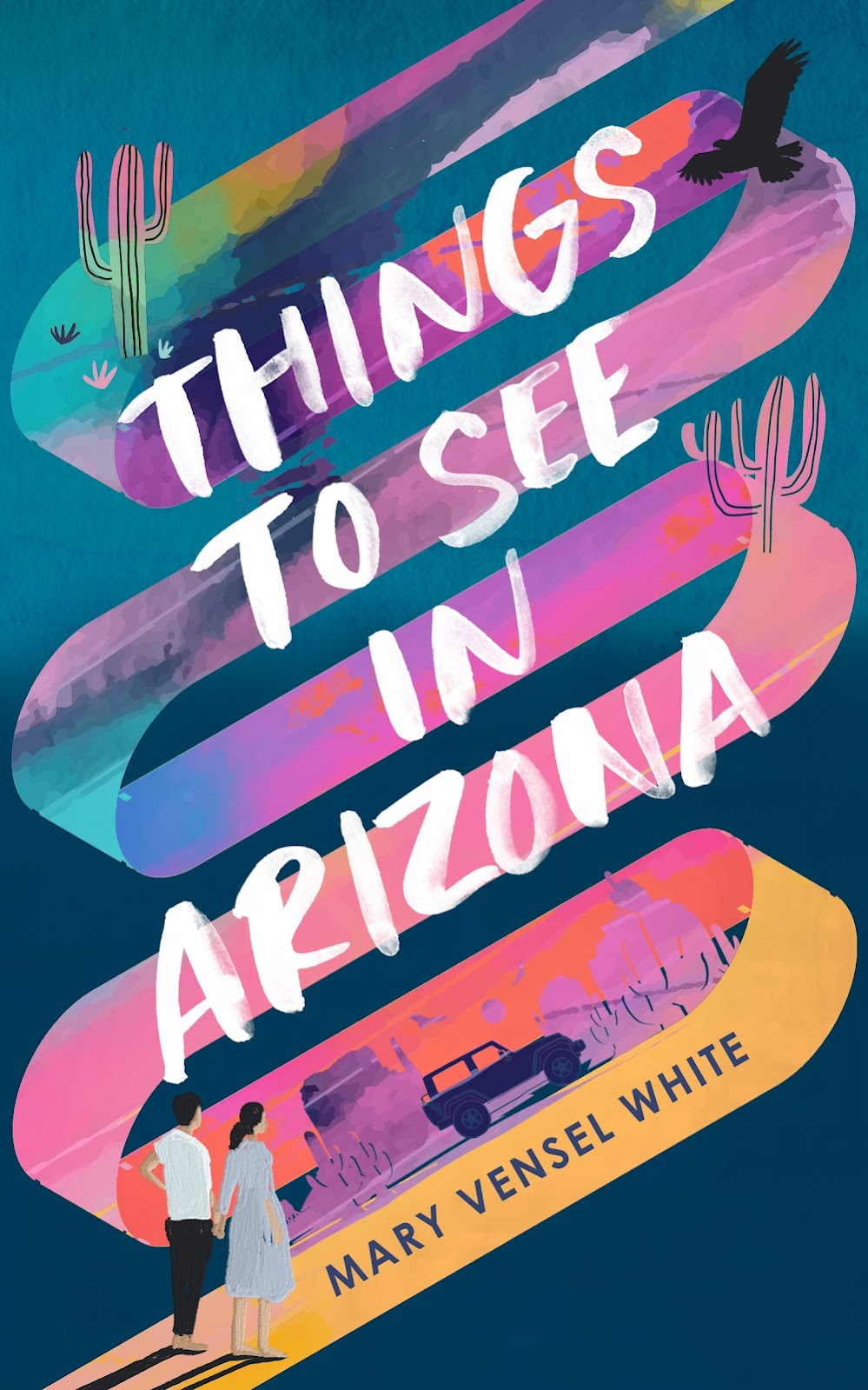
A brief post about the genesis of a short story, eventually titled “Driftwood,” which will be published, finally, this April.


For the past few years, considerations of form and genre have been at the forefront of my creative endeavors, and this post speaks to that.


An imagined conversation between “I” and “them,” this post could easily be filed under the Personal category as well. Another entry which brings me back to a specific feeling and time.

Writing Life


What happens when you get, perhaps, too much feedback on your writing.


Some thoughts on why a tendency toward melancholy is a gift and a curse for writers.

Personal


I know I said that O’Connor post was the most-read, but this one I also posted on Medium, where it picked up over 11K views. Combined with the views here, it has over 13K to date. It’s the story of the time my sister acted as surrogate for a couple in China.


I’ve had many losses in the past few years and unfortunately, learned a lot about grief.

Memorial


When Neil Armstrong passed away, I wrote about my grandfather, who knew him, and about the Six Million Dollar Man.


Going through my grandmother’s belongings, we found some papers pertaining to a trip she took with her nurses’ association. I wrote about it here.


The post I most wish I hadn’t written, the eulogy for my mother, who passed away last year.

Dear readers: I appreciate all of your comments and feedback over these years. I was hoping to come to some conclusions through this process of looking back, and I think I have. In the next couple of years, I have plans to finish two novels, and I think what I miss doing most at this blog is writing about books. Other writer’s books, and the ways they inspire, disappoint and confound me. So look for more book reviews here, maybe. I’d also like to expand the types of things I’m reading. I’d like to get back to reading more biography and history, maybe even an occasional memoir, YA or spiritual book. Lastly, I’d like to read thematically—several books on a topic or theme. And I think I already have an idea for a summer reading project along those lines, so watch for that as well.

Monday, January 14, 2019

Life in Moments


When my grandmother—my mother’s mother—was dying, she was in and out of consciousness, not always lucid, and she often confused my mother for other people from her past: her own mother, a cousin, one of her sisters. She said things that must have come from memories and had no place in the present. And although sometimes my mother seemed hurt when she wasn’t properly recognized, I found my grandmother’s jumbled mental state—a series of moments, people and places, in no determined order—well, I found it to be of some comfort. It’s what's meant by “her life flashed before her eyes,” the most indelible moments rising up to illustrate who you have been.
 
Long ago, I had a wall hanging that said “Life is not lived in hours, days, or years, but in moments.” And I thought that to be a very deep concept, and I still do. Think about when you meet someone at a party. You don’t sit down and begin a linear introduction: Hello, my name is Mary and I was born in Los Angeles…. What organically happens with people is that we find things in common and we tell stories about our lives. For almost two decades I have been friends with a certain woman who recently told me something about herself I had never known, something that seemed so fundamental I couldn’t believe we had never discussed it. Such are life, and people, and the ways we can know them or never will know them.
 
I’m telling you all of this in a roundabout way of talking about Bellflower, my “novel-in-moments,” which will be published next month, and to perhaps give you some help if you decide to get a copy of the book (thank you!) and might be perplexed by its form. These musings about life and its moments (among other things) pointed me towards the method of the novel. But let me give you an illustration of what I mean.
 
Let’s say I want to tell you about a character, a person. I’m making him up now, as I type this. His name is David Price. I will tell you five brief things about him, five moments from his life. 

1.      When David was 41, he had a nervous breakdown. He was out of work for two months, and along with therapy and medicine, he took up woodworking. He made beautiful wall-to-ceiling bookshelves for the den in his house.
 

2.      David’s mother often tells the story of when he was four years old, and she came into his room to find him arranging his picture books into straight columns and rows on his carpeted floor. He explained the ordering of them, which had something to do with animals and also, children with and without both parents.
 

(Now, I’ll take a pause here to ask whether you are already drawing some inferences from these facts? Perhaps that David was an orderly sort of guy and maybe his breakdown had something to do with his sense of order, or perhaps from missing a father? This is the way our mind works, filling in the white space when we are given clues.)
 

3.      For David’s 70th birthday, his three children threw him a surprise party. He’d been quite antisocial for many months after the loss of his wife of 41 years; he hadn’t been in his wood workshop, or reading, or going to the gym regularly as he had most of his life, and they hoped to cheer him up.
 

(Are you thinking: Oh, good, he had a nice wife and a full life, despite that breakdown? Or did he? How did the wife handle his mental state? And were books a big part of David’s life?)
 

4.      When David was 54, his book about Vietnam was published by a university press. They threw a launch party for him but he was unable to attend when he developed a bad stomachache. David’s father had died in the war, and David had majored in history, eventually became a history teacher, because of this fact most likely.
 

(And now we have a timeframe, and can fill in some details about when David was born, etc. We can start thinking about what it meant to grow up without a father, the breadth of this loss.)
 

5.      David met his wife, Jeanette, at a faculty party, when he was 28. She was a science teacher, environmental. He brought her a glass of wine and told her about his mother’s recent marriage to a pastor. She asked if David believed and he said he’d have to think about it.
 

(Ah, this Jeanette. A scientific sort of person, serious and straight to the point. How did they counteract each other? And the mother remarried—how did this affect him?) 

Five moments and somehow, a pretty full sketch, at least, of David Price. And this is the method of Bellflower, which tells stories from the lives of three main characters and the family and friends in their orbit. The moments and stories can range from a few paragraphs to many pages. You may read the chapters, and the sections within them, in any order. And there is white space, plenty of it, and sometimes the characters reach across it to touch each other. I hope, if you decide to give the novel a go, you’ll let me know how you decided to read it and of course, what you thought.

Thursday, December 6, 2018

Favorite Reads, 2018

It’s that time of the year again, the end (or near the end), when we readers revisit the books that impacted us, the stories that made us laugh and cry, shake our heads in wonder or bow down in respect. For me, the year’s best were the ones that managed to break through and shake me up. It was a tough year personally, lots of loss, turmoil and change. I spent the first few months of 2018 on a lifeboat, concentrating on breathing and keeping a firm grasp as the waves bucked around me. There were long stretches during which I didn’t read at all. When I finally put my feet on dry land, I realized that although many foundations had been ripped from under me, reading was one I had taken from myself. Because of course books are often the ballast keeping me upright. So my list this year will have a chronological aspect, as I tell you how and why each of these books was like a foothold in a storm.

I finished only 29 books this year. I used to average about a book a week but for the past few tumultuous years, that number has dwindled. This year was particularly low, unsurprisingly. I read 21 novels, 7 short story collections and one memoir. Of note: three of the books were YA novels, research for a project I’m perpetually almost starting; also, two books that didn’t make the best list, Isadora by Amelia Gray and The Song of Achilles by Madeline Miller, have historical inspirations. One book defies all genres perhaps. But here they are, my top five books for 2018, resonating lifesavers one and all.
 
 In January, I excitedly tore into Deborah Reed’s newest novel, The Days When Birds Come Back (2018). Ms. Reed has been on my end of year list before, in 2014 (and wow, what a year of books that was, now that I’m looking back), and she’s always been a writer whose particular style and sensibilities hit me right in the heart. This novel is my favorite she’s written. It’s the story of June Byrne and Jamison Winters, two protagonists in a holding pattern caused by grief and guilt. This is the story of their meeting, on the Oregon coast where June has hired Jamison to renovate her grandparents’ bungalow. Here’s a bit from my initial review, because I like this part: “She shines a warm light on the profoundness of everyday existence, what the late writer Kent Haruf called ‘the precious ordinary.’ As we follow these characters getting through their days as we all do, we learn more about what they’ve lived through as we experience their coming together at the perfect time, in the perfect place. It seems a sort of miracle, like life itself.” Because I had been in a long state of grief when this novel arrived, and also because Ms. Reed writes like an angel, it moved me profoundly. This book will always hold a dear place in my heart, like a childhood friend.


In March, I attended the Master’s Workshop held at the Tucson Festival of Books every year. I hadn’t been reading (or writing) much, but the days amongst writers, talking about writing, were like a shot in the arm. I took home a couple of books written by one of the workshop leaders, Kevin Canty, and in May, I finally read one. His story collection, Where the Money Went (2009), is a contemplation on love and the loss of it. His characters are heavy with testosterone but also hope, and I think what struck me to the core was the stubborn tendency they all had to pursue tenderness and connection, even when it seemed it would most likely lead to pain and more emptiness. Reviewers have compared Canty’s writing to O’Connor, to Carver, to Banks, and I think the comparisons are quite justified. These are masterful stories.
 
In July, I cracked open another eagerly-anticipated novel, Kudos (2018), the third in Rachel Cusk’s trilogy. The second, Transit, was my very favorite read of 2017, and the first, Outline, was an honorable mention in 2016. Those of us who worship Cusk’s trilogy—mostly writers I know—have a hard time putting into words just what it is that vibrates us so. As for form, the story is told through the protagonist’s interactions with other people. She is merely an outline; we come to know her as she moves through life. So there’s much to say about form and how it excites us writers because of the newness and possibilities of what Cusk has done. But what makes Kudos and the entire trilogy stand head and shoulders above so many other books, for me, is probably because it traces the journey of a woman who is forging a new reality and identity after loss. It’s about a woman building a new life after a divorce, a mother trying to do right by her children, a person trying to rediscover that lost, innate part of herself that ultimately, can fully embrace life. Yeah. So it was personal for me, unsettling and deeply comforting at the same time. Amazing books.
 

I think Cusk’s writing cracked me open, reminding me of the foundational joy that I wasn't getting enough of throughout the end of my marriage and loss of my mom—READING, duh!, and in this spirit, I started my Summer of Chabon. I wanted to read immersive novels, to be transported for some good chunks of time, as good novels can do. And my first read, Michael Chabon's Wonder Boys (1995), did not disappoint. Many people have read (and loved) this book, or maybe you saw the movie, so I won’t go on and on here. Revisit my ravings here, if you’d like. Wonder Boys was also a July read.

 
My Summer of Chabon had some rocky moments, so I took a breather with Jamel Brinkley’s story collection, A Lucky Man (2018). Like Canty’s stories, the characters in this debut have a decidedly male perspective, for whatever that’s worth. But the writing is crisp, purposeful and wise, never letting go for a moment. Brinkley writes about characters growing up and navigating a world as boys and men of color, dealing with race but mostly, with relationships and the longing and performance they require. Brinkley’s vivid writing in these timely stories stayed with me a long time; it’s a true sign of greatness when a writer can bring you to experiences far outside your own and leave you with a feeling of understanding. If anything, in this #Metoo time, these stories remind us that manhood is a condition to be explored as well, particularly when boys are left adrift.

I’m happy to report that my reading pace has picked up, and I hope to have a longer list to share in 2019. As always, I take notice when people tell me about their very favorite reads of the year, so please feel free to do just that below. And happy reading in the new year!

Friday, November 2, 2018

Where Writers Live


Let me tell you something about writers that you may not know. And by writers, I can only speak for those of us whose main commodity is human emotion. Other writers—those who deal in history, or intricately woven plots, or fantastic, created worlds, or other goods—are certainly appreciated neighbors, but for my purposes today and what I’m going to tell you, I’m speaking of writers whose primary and main obsession is people, and what they think and feel.
 
We live in houses, all of us. The houses were built by blueprint, or piecemeal, by necessity, and the framework of each is comprised of memories and stories. Note: these two building materials are scarcely discernible from each other most of the time. We can hardly tell them apart ourselves. They’re both strong, though, and keep the roof over our heads. Our houses have windows, of course, but we can only look out. You can try to look in; you can put your face right up to the glass and strain, and you may catch a glimpse of something shadowy, but that’s about it. We like the windows but sometimes forget they are there. In fact, we may shut the blinds for hours, days, weeks at a time. We like the dark in our cozy house. We are fine; don’t worry about us.
 
You may have noticed that every so often, we swing the windows open, propping each with a piece of wood chiseled from the frame. We let some of the musty air from the house out; we take some of the fresh breeze into our lungs. On special days, sunshine streams into the windows so brightly, we have no choice but to dance. Often we need a period of closed windows after these events.
 
Next to our houses runs a creek. Yes, next to every house, all of them. The official name for this creek is Melancholia—that’s what it was called long ago when such things were named—but I’ve heard it called Sentiment, Sadness, Sorrow, and many other names starting with other letters too. Our friends and loved ones may whisper “Crazy Creek” to each other, but we know they mean it with love. It’s a gentle creek most of the time. Within our houses, all the time, you can hear the low murmur of rushing water, a sound we usually forget is even there. We like the creek, though, and feel it even when we don’t know we are. On occasion, we confront it straight on. We go outside and get our feet wet, step right in and let the cool water up to our knees, our waists. Sometimes, we lie on our backs and let the water rush over us; we like the way the world looks through this blur of watery movement.
 
Once in a while, a storm comes, the water rises, and the creek floods into our houses. We’re used to this and in some ways, welcome it. You can still visit during these times. You may not want to, and we understand that too. If you do come by, we’ll welcome you right in but you should be aware that we may be busy rushing from room to room, filling buckets. We may not have time to talk, or much to say. We do appreciate you stopping by though.
 
Why did we settle in houses next to creeks that flood? You might as well ask why some choose to live in the forest where wild animals dwell, why this old woman prefers the hot desert and that young man the boisterous city. Without the creek, we wouldn’t appreciate dryness nearly as much. Without the creek, we wouldn’t feel connected to people in other houses, next to other creeks, or even to the man in the city, or the woman in the barren desert. We like the creek. We like to rest in our beds at night, hearing its music, imagining its path, surviving its chill. And then we get up and try to remember all of it for those of you in the forests, next to farmland, in high-rises, where perhaps you can’t hear water at all, or have forgotten to listen.

Thursday, September 27, 2018

Final Installment, Summer of Chabon: Moonglow


I chose Moonglow as the final novel for my summer of reading only books by Michael Chabon. Dutiful readers of this blog will recall that I took a break to cleanse my palette with some short stories somewhere in late August, but mostly, these four Chabon novels were the only fiction I’ve ingested for the past several months: Wonder Boys, The Yiddish Policemen’s Union, Telegraph Avenue, and Moonglow.
 
To start. It’s amazing to me how different each of these books were, and how varied my reactions could be to writing by the same author. I suppose experiencing an author’s oeuvre, in broad view, is much like looking at a person’s life: a series of changing influences and expressions, many years divided into sections, one person seemingly many different people at different times.
 
So. How would you begin to tell the story of a life? What if that life was inextricably tied to yours, while you were growing and changing and becoming new versions of yourself all the time? What if you love the person, and that colors your perspective? What if you’re a writer of fiction by birth, and your world is further colored and texturized by your impulse to create and find meaning? What if the person whose story you want to tell is leaving you, and you must face the abyss that will follow your telling?
 
This seems to be the task Michael Chabon set for himself with Moonglow, after he spent a week with his dying grandfather, who, in his last days, told many anecdotes from his life. Spending these final moments with his grandfather became the spark for this novel, which reads in many ways like a memoir and which has inspired endless debate as to its genre. People want to know: Which parts are true? Why didn’t he just tell the story from his grandfather’s point of view? How could he possibly know or remember some of those details?
 
My book club was no different; they had questions. I chose this for our September read and we discussed it last night. Being a writer, I think I have more patience than perhaps others do for matters of genre. I’m usually content to let a book be whatever it is. I don’t really care what a book might be called, and while I was reading Moonglow, I didn’t really care what was true and what wasn’t. I was happy to follow along with whatever Chabon intended. It was full of tender, relatable moments and vivid details that resonated and in the end, it struck me as a work of incredible love, of conscientious reverence, of grudging and precocious creativity. And what memoir is entirely true anyway? We tell our own stories from the limits of our singular viewpoint, perspective and memory, and telling the story of someone else introduces more levels, more gaps, more subjective interpretation.
 
As for plot, Moonglow unfolds as a narrator, “Mike,” spends time with his grandfather near the end of the old man’s life. The grandfather tells about his time in the war and brushes with the law, his intellectual obsessions, and the complicated marriage he shared with the narrator’s grandmother. If anything, it’s an exercise of speculation, as the narrator expands the stories into realms he cannot have witnessed. The story has a timeline of sorts, but it jumps around in time and place. With this, the book club also took issue. Perhaps in this regard, the novel could be considered a bit messy. But again, I have more patience with that, I think. Life strikes me as a very messy business, not always lining up in an orderly queue of experiences. Even in this occasional haphazardness, I felt the deep chord of truth. What can I say? I got the feels from Moonglow and I found myself thinking about my relatives who have passed and the stories they told, and the pictures and memorabilia that remain, and the deep, deep grooves they left in the road of my life, my story. If I were to try to tell the story of any of them—of my recently-passed mother, say—I think it would be much like this: things she said, things I remember, things I make up in my head. It seems to me all fiction may fall into this very category, one universal genre, and I’ll be thinking about Michael Chabon’s contribution to it for a good, long while.

"As soon as we express something, we devalue it strangely. We believe ourselves to have dived down into the depths of the abyss, and when we once again reach the surface, the drops of water on our pale fingertips no longer resemble the ocean from which they came...Nevertheless, the treasure shimmers in the darkness unchanged." ---Franz Kafka