Wednesday, May 25, 2011

To the Woods


"I went to the woods because I wished to live deliberately, to front only the essential facts of life, and see if I could learn what it had to teach, and not, when I came to die, discover that I had not lived."

--Henry David Thoreau, Walden


I spent some time at the Oregon/Washington border last weekend, a beautiful area called the Columbia River Gorge.  I'd forgotten how it feels to be submerged in nature, green shoots above and around, teeming life underfoot.  Blue sky, crystalline air, every shade of green.  Cities have their own feel--concrete, scurrying humanity, shiny surfaces, laughter and food smells seeping from warm rooms. 

In my novel The Qualities of Wood, the sense of place was important to me.  The characters were displaced from their normal urban surrounds and forced to confront nature, their natures.  I wanted it to feel as if the line of trees behind their country house, the looming woods, was another character in the story, with its own transient mood, its own opinions and observations.

If you're a creator of art...how does your environment inspire you?  Does it shape your work? 

Monday, May 16, 2011

On Orphans in Literature

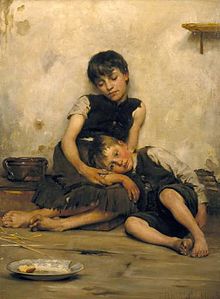
Recently, I read two novels that had as their main character an orphan.  Both were set in modern times; neither was an adventure or fantasy book.  In both cases, the parents were lost in automobile accidents and the main characters were sent to live with eccentric and emotionally unstable relatives.  And I found myself thinking about my own upbringing in modern times and how few true orphans seemed to exist.  Advances in medicine have pretty much eliminated plagues in developed countries and unless you’re in a war-torn area, your chances of losing both parents in childhood are probably slim.  And it got me thinking about all the famous orphans of literature—Jane Eyre, David Copperfield, Huck Finn, Harry Potter, et. al.—and why this is such a popular choice for writers.
Wikipedia, as it always does, had an answer:

“The lack of parents leaves the characters to pursue more interesting and adventurous lives, by freeing them from familial obligations and controls, and depriving them of more prosaic lives.  It creates characters that are self-contained and introspective and who strive for affection.”

Who writes this stuff?  In the case of one of the books I recently read, I felt that the main character’s orphaned status served as an excuse, a crutch.  The character was unable to have any type of “normal” life.  The writer used the fact of her orphaning as a device to allow the character to act in totally irresponsible and atypical ways.  This particular character could not properly relate to any other person; she was a social misfit, a pariah from the rest of the world (a characterization, by the way, I might take offense to if I was an orphan).  And it struck me as sort of a lazy characterization ploy, this removing of the parents.  Because what’s more difficult, more multi-faceted, more abundant with opportunities for excavation, than the parent-child relationship?

Again, our expert at Wikipedia:

“Parents, furthermore, can be irrelevant to the theme a writer is trying to develop, and orphaning the character frees the writer from the necessity to depict such an irrelevant relationship.”

“Irrelevant relationship?”  I’m no psychologist, but I think this Wikipedia contributor may need to explore his relationship with his parents, in therapy.

I’d be interested to hear from writers who have written an orphaned main character and what your reasoning was, what freedoms it gave you in the writing, what drawbacks.  Maybe I’ve spent too much time in my books dealing with the ripples of childhood, the influence of parents, and that is why so many of my characters are depressed!

Thursday, May 5, 2011

Symmetry


Symmetry...does it exist in the world as a natural happenstance?  Or is it man-made, created by our minds in a desperate attempt to make sense of our fleeting world?

A friend forwarded this video and it came at a good time.  I am in the middle of a writing project, another novel and well, I've stalled out a bit.  I'm probably about sixty percent through, at a pivotal moment in the story, at the crease dividing the start of the story from the end, at the point where perhaps things should start gettin' all symmetrical.

Aristotle explained it thus:

Now, according to our definition Tragedy is an imitation of an action that is complete, and whole, and of a certain magnitude; for there may be a whole that is wanting in magnitude. A whole is that which has a beginning, a middle, and an end. A beginning is that which does not itself follow anything by causal necessity, but after which something naturally is or comes to be. An end, on the contrary, is that which itself naturally follows some other thing, either by necessity, or as a rule, but has nothing following it. A middle is that which follows something as some other thing follows it. A well constructed plot, therefore, must neither begin nor end at haphazard, but conform to these principles.

(Those inclined to do so, review Poetics here.)

We all know the feeling, when a book starts "tying up loose ends."  There's a pleasant association, some orderly part of ourselves, as readers, that nods in approval.  "Oh yes," we think, "of course she needs to break off the relationship"...or, bringing in our 20th-century psych awareness:  "She needs closure with her mother before this story can end."

But isn't there something mildly exciting about peanut butter without jelly, about a lock without a key?  Can't we gain a unique satisfaction (perhaps a volt to a different part of the brain) from a main character who does something to confound, disappoint or startle?

Thinking about these things and many more as I contemplate the path for my main character, and I'm remembering other literary characters whose choices and situations were unexpected but rewarding, sensible yet provocative. 

"Life is short. From here to that old car you know so well there is a stretch of twenty, twenty-five paces. It is a very short walk. Make those twenty-five steps. Now. Right now. Come just as you are. And we shall live happily ever after."
                                                                                   --Vladimir Nabokov (Lolita)

Friday, April 29, 2011

Sluice-rush

I wish I knew more about poetry.  I wish I had the composure and capacity to sit and read a volume of poetry, because I imagine that some erudite people do this.  I wish I could sit on my veranda and gaze out at the trees, looking down once and again to savor a phrase, a verse.  The fact is...I'm too manic to ponder for long and most of my quieting-down happens in the moments before sleep or when I am forcefully detained, such as in the dentist's chair yesterday, where I came upon a fabulous idea for a play.

At any rate, there are some poems that stay with me and I return to them countless times for inspiration and pleasure.  Reading Seamus Heaney's The Rain Stick is like having a piece of rich chocolate cake, or whatever food stuff causes fireworks to explode in your mouth.  It's like listening to your favorite music while someone massages your back.  It's a one-stop, all-you-can-eat buffet for the literally-minded. 

A word from it came to me this morning..."sluice."  See how Heaney has paired it with "rush."  Say this over and over; note context in poem; look up sluice at dictionary.com.  I promise you won't be disappointed.

Without further ado:


The Rain Stick
Seamus Heaney

Upend the rain stick and what happens next
Is a music that you never would have known
To listen for.  In a cactus stalk

Downpour, sluice-rush, spillage and backwash
Come flowing through.  You stand there like a pipe
Being played by water, you shake it again lightly

And diminuendo runs through all its scales
Like a gutter stopping trickling.  And now here comes
A sprinkle of drops out of the freshened leaves,

Then subtle little wets off grass and daisies;
Then glitter-drizzle, almost-breaths of air.
Upend the stick again.  What happens next

Is undiminished for having happened once,
Twice, ten, a thousand times before.
Who cares if all the music that transpires

Is the fall of grit or dry seeds through a cactus?
You are like a rich man entering heaven
Through the ear of a raindrop.  Listen now again.

Tuesday, April 26, 2011

Resolutions: Late and Absurd


We’re well into 2011, certainly too late for New Year’s resolutions, but as I avoid work today, I’m dreaming big.  No “lose weight” or “clean the attic” aspirations for me…no, today I’m thinking about all the:


Big Things I Would Do If I Had The a) Ambition and/or b) Time and/or c) Mental Stamina:


  1. Learn to play the guitar, preferably sappy songs of the variety I like to belt out and cry to in the car.

  1. Study Russian. The language, in the original form, with all the crazy symbols that look like they’d make a cool tattoo.  Then use knowledge of Russian to read Tolstoy and tell everyone that I did so.

  1. Get hair weaved with a long, thick, curly black mane.  Toss around on the street, lift from neck when hot.

  1. Become a yoga master.  Not sure what this entails, but I think I could commit a solid hour a day, especially if I’d get a bum you could bounce coins off.


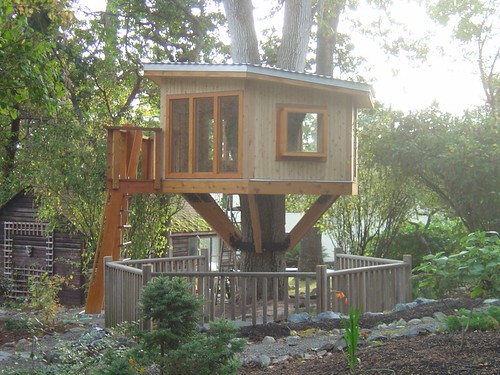
  1. 5.  Build a tree house, complete with Moroccan rugs and a multi-colored beaded entry.  Uncertain whether I get this image from a book about a harem or that Brady Bunch when the girls upgraded their room (or was it Greg’s hippy room?).  Can’t remember.


  1. Google episode of The Brady Bunch where somebody had a cool room

  1. Win the lottery (amendment:  insert Thing number 6a:  buy lottery ticket).  Use fabulous winnings to pay off mortgages on the homes of mother and siblings, so that they will always agree to drive to my house for future holidays.  Forever.


  1. Be very judicious with my shoes.  Throw away most, keeping only those that make me happy.

  1. Learn how to meditate.  Tap into vast, spiritual reserve that must lurk somewhere underneath the constant buzzing sound.  Mustn’t it?

  1.  Travel back in time.  Feel the superhuman energy of youth.  Climb fences, run through fields, etc.  This last one is probably outside the realm of even this fantastical list, but wouldn’t it be fun?
"As soon as we express something, we devalue it strangely. We believe ourselves to have dived down into the depths of the abyss, and when we once again reach the surface, the drops of water on our pale fingertips no longer resemble the ocean from which they came...Nevertheless, the treasure shimmers in the darkness unchanged." ---Franz Kafka