Wednesday, March 23, 2022

Film influences in Starling


Films and books have long held two neighboring places in my heart. As forms of storytelling, they have shaped and influenced me, each informing the other. I warn students of any class I teach that I will be referring, indiscriminately, to all forms of storytelling in our discussions—but what I mean by that is you will hear me talk about books, movies, television shows, Netflix series, songs, theater, etc.


Sometimes, writers are said to write in a “cinematic style” or with a “cinematic perspective,” and that has certainly been said about my writing from time to time. What is meant by this? It could mean the writing provides encompassing and vivid settings that are easy to visualize. Perhaps it means the form lends itself to the shape of film, with abrupt cuts from scene to scene or other techniques. Maybe it just means we can easily picture the book as a movie. For an excellent discussion of cinematic writing, look here.


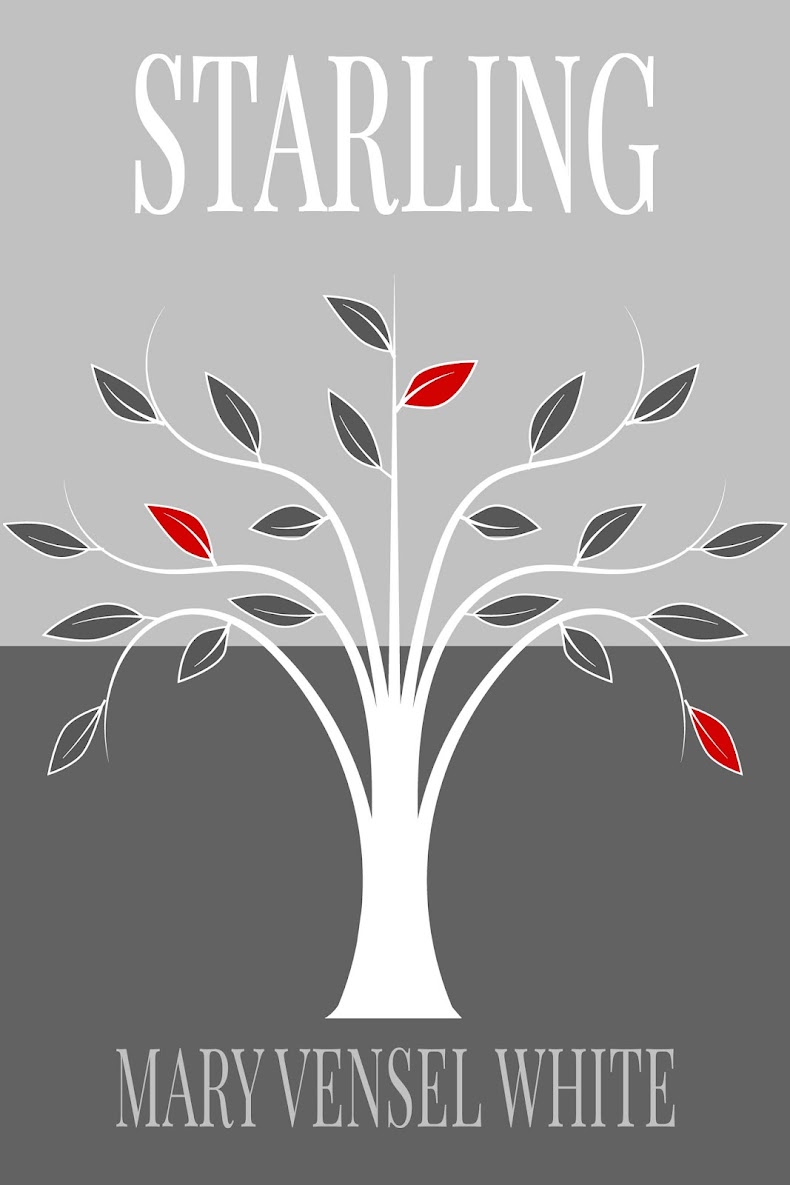
I have a new novel, Starling, coming out in May. I started writing it a long time ago, and it has gone through many iterations. There are—what I suppose you can call—stylistic flourishes in it. I might as well be up front about this. In my experience, most people question or resist stylistic flourishes! Probably a result of our modern times, most of us feeling like we don’t have time for anything other than a direct line from A to B. But in Starling, aside from the main themes and story I wanted to explore, I also wanted it to say something about film, and about how these two forms of storytelling exist amicably for me, side by side.


Like me, the main character in the novel holds a lifetime of images in her mind. Gina has settled into a comfortable routine over the years, and feels her love of watching stories has expanded her horizons in many ways:


“Through television and movies, she had travelled all over. She knew Italy from Roman Holiday and Room with a View, California more from Chinatown and Irreconcilable Differences than her few visits to Deborah in Sacramento. She had digested entire chunks of history by watching television miniseries: twentieth century Australia in The Thorn Birds, the Civil War in North and South.”


Gina may have been influenced by her mother, a woman who named her oldest daughter after the actress Deborah Kerr and who sought refuge in a darkened living room after the kids had gone up to bed.


“Gina remembered a frequent sight: her mother, legs tucked underneath her on the tweed sofa, face lit by a flickering television screen. There was no getting her mother’s attention if she was watching something.”


And speaking of Deborah Kerr, there are certain images, certain scenes you will never be able to budge from your consciousness, once seen. Forward to 3:30 for the good part.

One of the inspirations for the novel was the idea of people creating their own realities. This has been a preoccupation of mine since college when I read Benedict Anderson’s Imagined Communities in a history class. A strange influence for fiction writing, I know, but the idea that nations could be/are formed by the collective imagining of their members—well, this has been something I’ve transferred to my fiction again and again, substituting "reality" for nations, and applying this idea to individual characters and families (even, especially, when “truth” is questionable). I never could have predicted how this basic premise would eventually affect my life, drastically and quite personally, but that’s another story altogether. In this novel, Gina has been living a life of her own making. And sometimes, the life we make can have illusionary aspects. We have so many films about alternate realities now and the ways technology has infiltrated our personal lives but when it came out in 1998, The Truman Show presented something novel—a person whose life ended up being something entirely unimagined. Gina catches glimpses of this movie on a long, international flight.


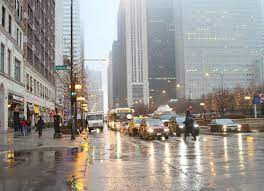
There are many visual references in the novel but in its first version, the opening scene was a protracted, stylistic flourish: a sequence of downtown Chicago during a storm. I wanted to describe and set the scene as a movie would. Here, the shot of commuters huddling underneath a bus stop shelter, there, cars inching down a drenched street. Then we follow the camera view to a single window in a high rise, where we focus on our hero, standing at the rain-streaked glass. This flourish has been shortened over the many drafts of the book, but the main intent is still there. The thing about images and stories and characters and silky dresses that bounce and glide around a palatial room—these things tend to attach themselves to other images and stories and the impossibility of a boat piercing through a piece of the horizon—and sometimes, something from our subconsciousness is unearthed unexpectedly. And this is what happens to Gina as she stands at that window. She’s been humming the tune from a Gap television commercial all day. It was a popular commercial at the time, in the 1990s, and I wish I could find a version with better quality.


“The song is simple, mesmerizing, and it’s been in her head all day. The visuals: dancers in t-shirts and khaki pants converge and split into various groupings…The dancers are young and happy, perfect skin in various hues. And somehow this song, these gliding forms, are tied to a memory of Gina’s father, talking about Elvis at a dinner party.” 

 And so it goes, memory tied to memory, images linked to others.


Wednesday, December 22, 2021

Favorite Reads, 2021


The year is drawing to a close and as I look back over my reading for the year, I realize I’ve fallen short of my goals. But it’s for good reasons. In 2021, I was fortunate to have an increased amount of editing work, which means I was reading future books rather than those already on the shelves. Also, I read a fair amount of student papers, and even started writing another novel. I’m grateful for all of these aspects of my reading and writing life! In the tradition of this blog, here are the stats for the year.

In 2021, I read 28 books—down from 44 in 2020 and 30 in 2019. This year’s leisure reading included 14 novels, 1 short story collection, 6 memoirs and 7 graphic novels. The graphic novels are, of course, novels, but I distinguish them as a separate category this year so I can give the format a little plug here. My typical procedure for my end-of-year list is to choose my five-star reads and this year, there were only six. In no particular order:


Echoland by Per Petterson (1989)

Per Petterson is one of my favorite authors, and I was surprised to find a novel of his on my shelf that I hadn’t read. The international, translated version of Echoland was released in 2016, but the novel was originally published in Norwegian in 1989. Petterson’s writing, for me, evokes a depth of feeling similar to the work of other favorites—Kent Haruf, Marilynne Robinson—a quality that is difficult to explain. He quietly presents everyday moments in their resplendent glory. Haruf called it “the precious ordinary.” These writers strike a chord for me, some universal understanding about life’s struggles and joys and questions. Echoland didn’t disappoint. A coming-of-age story, the novel follows Arvid, a 12-year-old on holiday in Denmark. Arvid has the energy and observational skills of young adulthood, and a fair amount of unbridled longing—for answers, for adventure, for autonomy. There’s a strain of grief in his family, and Arvid is awakening as a sexual being as well. And Petterson creates a mood of apprehension and expectation that brings the reader right along. It’s a remarkable novel.


The Haunting of Hill House by Shirley Jackson (1959) 

This National Book Award finalist by one of our great American masters is considered by some to be one of the best ghost stories—if not the best—written in the 20th century. Adaptations abound, such as the 2018 Netflix series. The novel involves the named house, and four main characters who have arrived to investigate the paranormal activities within. Reportedly, Jackson was inspired after reading about a group of 19th century “psychic researchers.” The resulting novel is about the house, but it’s really about the four characters and their pasts, motivations, and relationships. And it’s a spooky read, one that evokes a mood you won’t soon forget. I read this novel for my Summer of Houses project, and wrote more about it here.


Klara and the Sun by Kazuo Ishiguro (2021)

I had many thoughts when I finished this new novel by the acclaimed author of one of my favorite, all-time novels, The Remains of the Day, but the main one was simple: How did he do that? And by “that,” I mean, how did Ishiguro manage to write an entire novel from the point of view of an “Artificial Friend”—an unique and objective persona on the outskirts of human feeling and insight, and yet, manage to keep this reader enthralled and entirely engaged? The novel begins in a store, where Klara and the other AFs await purchase by a family. As she interacts with humans, Klara’s innocence and moldability act as a mirror in which humanity’s foibles and strengths materialize. The novel raises existential questions: what does it mean to be human, to love, to lose ourselves? What are the best parts of being human, and the worst? And it does all of this while presenting a plot with twists and turns. I’ll think about this book for a long, long time, and how it reflects and interacts with Ishiguro’s other books.


Pale Morning Light with Violet Swan by Deborah Reed (2020)

The more I think about that Petterson novel, the more I realize I probably left it on my To-Read stack on purpose, waiting for a calm period of time when I could fully enjoy and absorb it. The same is true for this novel by Deborah Reed, which I purchased as soon as it came out but waited for the right time to read. The author and I have been acquainted for some years; early on, we bonded over our mutual love of Haruf, Petterson, Robinson, and her writing, for me, lives in the same realm and always touches me on some visceral level. This novel presents Violet Swan, a ninety-three-year-old artist in the last chapter of her life. She lives quietly on the second floor above her only son and his wife, painting abstract, colorful versions of comfort and calm. But a storm is brewing inside Violet, and the arrival of her beloved grandson sets in motion a string of events and the unearthing of memories she has kept hidden most of her life. It’s a stirring novel, full of soul and purpose and what Ms. Reed’s writing always means to me—that nurturing of an innate recognition of the feelings and complexity of our lives. This story and these characters are expertly drawn and continue to walk around in some corner of my mind.


Almost American Girl by Robin Ha (2020)

Almost American Girl is a memoir that begins with the teen Robin, whose life in Seoul, Korea, is disrupted when her mother announces a move to America. She leaves her friends and life behind, abruptly dropped into a place where she doesn’t speak the language or know the customs. Her relationship with her mother ruptures and she’s cut off from the world of comics she enjoyed in Korea. Robin’s story echoes the struggles many immigrants face, and it makes insightful observations about identity, gender expectations, and the power of artistic expression. Ha wrote and illustrated the book in muted colors that reflect her experiences, both in Korea and her new home, and the confusion of arriving in a foreign place and trying to make connections. If you haven’t dipped your toe into graphic/illustrated books yet, this would be a great place to start.


Long Way Down: The Graphic Novel by Jason Reynolds (2020)

Will is a teenager who’s just lost his older brother, Shawn, to what appears to be a gang shooting. Boys and young men in Will's neighborhood are taught three rules: No crying, no snitching, and always get revenge. So Will grabs a gun and sets out to avenge his brother’s death. Long Way Down takes place during the elevator ride in Will’s building; at each floor, he’s visited by the ghosts of men lost to gun violence. As they tell their stories and advise Will, he goes through a rollercoaster of emotions as he decides whether to live by the rules or not. This graphic novel version is an adaptation of Reynold’s 2017 award-winning book of the same name, and it’s truly enhanced by Danica Novgorodoff’s illustrations. She presents watercolor images that bleed through panes and create an eerie, memorable effect. Another highly recommended entry to the world of graphic novels, if you’re interested.


And speaking of graphic novels, here are some more recommendations. I read mostly in the YA and Middle Grade categories, because of the Children’s Literature class I teach, but I’m looking to expand more into adult offerings in the new year.


The Magic Fish by Trung Le Nguyen (2020)

Tien communicates with his Vietnamese immigrant mother through the fairy tales they read together. She struggles with English, and he struggles with coming out. This beautifully illustrated novel is touching and lyrical, a true reading experience.


Daytripper by Fabio Moon (2011)

This unique book presents several versions of the life of Bras de Olivias Deominguez, and several versions of his death. Each chapter starts at a different point of his life, demonstrating life’s possibilities, joys and sorrows, and in the end, the tenuousness of existence itself. Uniquely, brilliantly illustrated.


American Born Chinese by Gene Luen Yang (2008)

A ground-breaking, acclaimed book that reads like a modern fable. Three distinct characters come together in unexpected ways in this novel that touches on Chinese history, immigration, and self-realization.


Monday, September 6, 2021

Summer of Houses: The Yellow House


“To be remembered is next to being loved” –Emily Dickinson

Often, we'll call books in a range of genres “love letters” to a place. Whether it’s memoir, poetry, fiction, or even travel writing, this term is used to describe writing that pays homage, fondly, to a specific point on the globe. 

And what is the best expression of love, if not being remembered, as so aptly expressed by perhaps one of our most sentimental poets, Ms. Dickinson. Places from our past can leave indelible impressions, especially when they were shared with the people and events that have shaped us. I wrote about my grandmother’s house once, and how—if I close my eyes—I can picture every detail of her house as if I was there last week. The proportions of the rooms, many of the details of things like carpet and cupboards and lamps, the quiet and fragrant stillness.

If remembering was a sport, perhaps Sarah M. Broom would be an Olympian. The Yellow House is her detailed, comprehensive love letter to the home where she spent her childhood. She remembers and remembers and remembers—every hiding place in the house, the “medium-size hole in the floorboard (of a bathroom) that will eventually become a large hole letting in more sound and outside creatures,” the smells, the holiday decorations: “gold garland around the door trim; shiny red paper on the front door, which served the dual purpose of keeping the draft out and hiding its ugly tan color.” We see the house through Broom’s eyes as she grows from childhood to adulthood, the magic along with the state of disrepair stemming from Hurricane Betsy, which made landfall forty years before Katrina.

“The plumbing was never right. We had buckets underneath the kitchen sink catching dishwater. The kitchen cabinets had big holes that led to the outside. Mom plugged those holes with foil after hearing somewhere that rates couldn’t chew through. And still they did.”

So the house is the thing, and in the introduction, she lets the reader know the significance of those four walls.

“Before it was the Yellow House, the only house I knew, it was a green house, the house my eleven siblings knew. The facts of the world before me inform, give shape and context to my own life. The Yellow House was witness to our lives. When it fell down, something in me burst.”

But Broom’s remembering isn’t confined to this building and its details. She remembers all who lived in it. She describes each of her siblings and their manner of speaking and dress. Throughout the memoir, she reaches for understanding and recollections of her father, who died when she was a baby. Often, she shares family photographs and describes what they are reflecting—things we can see, and things we can’t. She remembers events outside the walls of the Yellow House; this family history spans back one hundred years and takes into account the changes afoot in New Orleans, America, the world. As I said, it’s very comprehensive and at times, this avalanche of details feels heavy for the reader. But there's a lulling reverence to it as well, a power. In an interview for The Atlantic, Broom talked about the difficulties she had with publishers, because of this inclusiveness of topics and the breadth of memories:

“’The main complaint was that I needed to choose,’ … ‘that I was either going to write a book about New Orleans or a book about my family, but not both—which was so confounding to me that I couldn’t even process it.’" 

Broom’s memories start with the house, and everything is tied to it. How do we order memory, or separate, cleanly, one thing from another? For the author, place and people and events intertwine and stay that way. 

“I thought then and still think now: when a person dies in a place they become the place and nothing is ever the same again.”

Of course, Hurricane Katrina was for Broom’s family—as it was for many—a seismic, devastating event. The Yellow House is destroyed, and the family spreads out. Just as Broom’s mother, Ivory Mae, scraped and fought to keep “the only house I ever knew,” the author returns after Katrina and tries to get some reimbursement for the house, the ruins of which were hauled away without notice by the city.

My Summer of Houses reading project concludes with this gorgeous and accomplished memoir, which deserves every bit of the National Book Award it received. It’s a book that certainly presents a memorable and notable house, one that looms at the center of this author's story. The Yellow House is a a touching expression of love, an examination of the ways places can reach our very depths, clinging like vines on a wall, and surrounding everything.


Tuesday, August 17, 2021

Summer of Houses: Deathless


      You enter here, in helmet and greatcoat,
Chasing after her, without a mask.
You, Ivanushka of the old tales,
What ails you today?
So much bitterness in your every word
So much darkness in your love
And why does this stream of blood
Disturb the petal of your cheek?
                        -          Anna Akhmatova

Throughout her novel, Deathless, Catherynne M. Valente sprinkles excerpts from poems by the great Russan poet, Anna Akhmatova. One of the best known and most prolific of Russian writers, Akhmatova lived from 1889 to 1966, experiencing both prerevolutionary and Soviet Russia. She writes here about a stock character in Russian folklore, Ivanushka. A simpleminded but lucky young man, Ivanushka is described as amiable, with blue eyes. The details of his family and station vary from tale to tale, but he is always portrayed as someone who leads with his heart over his head. He’s naïve but kind, sometimes considered a fool but often misjudged by those around him. He’s not always what he seems to be. 

I said in an earlier post that this novel is perhaps the biggest stretch for my summer reading theme: houses. Yes, there’s a house, and it makes somewhat of an impression. Deathless opens with this:

“In a city by the sea which was once called St. Petersburg, then Petrograd, then Leningrad, then, much later, St. Petersburg again, there stood a long, thin house on a long, thin street. By the long, thin window, a child in a pale blue dress and pale green slippers waited for a bird to marry her.”

Well, actually, the novel begins with a short scene in which a young boy is questioned and then released by a pair of military officers. He’s only eleven, but he’s accused of desertion. Three “skinny, molting creatures” (birds) watch from a nearby branch. This scene is followed by the first of the Akhmatova quotes, a poem about a faceless visitor, a riddle, and a wanderer in darkness. My point is, from the start, the stage is set for everything this remarkable novel aims to do: say something about the history of Russia, particularly throughout the twentieth century, recycle certain characters, tropes and stories from the vast landscape of Russian folklore, and tell a lyrically moody, visceral and exciting tale. And like the folk staple Ivanushka, things are not always what they seem. 

The novel focuses on Marya Morevna, the girl in the pale blue dress. For years, she has watched as her sisters were claimed for marriage by men who arrive as birds but transform into handsome young men before whisking away their brides. And so, she waits for her bird. When he comes, he’s handsome, all right, but his name is Koschei the Deathless, another figure from Russian folklore whose main characteristic is his inability to be killed.

And the house? The one Marya has been living in, before leaving with Koschei, has a tendency to expand and there are little domovoi, or house-goblins, about. And once she escapes with her bird-suitor to the Isle of Buyan, there are other strange features in the new world she inhabits, other strange, house phenomena:

“The main thing was the ruin of her house, like film laid on top of other film, so that she could look at a wall and see not only the wall but Svetlana Tikhonovna and her mother arguing over laundry in front of it, and Zemlehyed pawing at it, and the skin of a Buyan wall, so far from her. Everywhere her vision doubled and trebled, and her head sagged with the weight of it. Everything kept occurring all at once, each thing on top of the last.”

This novel draws from Russian folklore, with its dark imagery and themes. It’s not a book for children. I will admit that from time to time, the book was a riddle, as promised by Valente in that early Akhmatova poem. I had some trouble following certain relationships and twists of plot. It felt like things were happening, all at once, each thing on top of the last. And although the novel is strong in folkloric roots and fantastical elements, Valente draws complex characters; the development of Marya’s character was probably my favorite aspect. She changes from an innocent girl to Koschei’s frightened concubine and eventually, his wife. A major part of the story here is the sexy and ultimately, tragic love affair between them. The book has been compared to Bulgakov’s The Master and Margarita, and at the time of its release in 2011, the AV Club said “Deathless does for Russia what Susanna Clarke’s Jonathan Strange & Mr Norell does for England.” I can see where the book fits somewhere between these two, and yet, is something entirely different and unique, too.

As we run out of summer days, one book remains for my Summer of Houses reading project. I’ll be diving into Sarah M. Broom’s memoir, The Yellow House, next. I do love a book with a map at the start, and Broom starts hers with an outline of New Orleans, where the notable house she writes about lives.

Tuesday, July 20, 2021

Summer of Houses: White is for Witching


My second read for my summer of houses reading project is Helen Oyeyemi’s White is For Witching. As I mentioned in my previous post, Oyeyemi’s writing has been compared to Shirley Jackson’s, and for the gothic tone and the way she builds an eerie sense of uneasiness and foreboding, I would agree. Yet this novel is less straightforward than The Haunting of Hill House; it’s circular in structure and at times it’s difficult to gain footing in the narrative. The writing is trancelike, lulling the reader in, and our guides are unreliable on many levels. But where Hill House follows a linear trajectory that repeats wording from the beginning at the finish, and draws to close with the characters firmly ending their association with that house, White is for Witching feels like it leaves off where it starts, with each character tied by tangible or intangible tethers to the place where the trouble began—or at least, the space within four walls where they experienced it.

Oyeyemi’s novel tells the story of the Silver family house in Dover, England, and the four generations of women who have lived there. Our main character is Miranda, or Miri, who has moved to the house her mother, Lily, inherited, when her father decides the family should return to live there and turn it into a bed and breakfast. Miri and her twin brother, Eliot, are ten, and their first glimpse of the house is innocuous:

“Our new house had two big brown grids of windows with a row of brick in between each grid. No windows for the attic. From the outside the windows didn’t look as if they could be opened, they didn’t look as if they were there to let air or light in, they were funny square eyes, friendly, tired.”

Sounds nice! But soon, reader is told of the steps leading up to the house, which “bulged with fist-sized lumps of grey-white flint, each piece a knife to cut your knee should you slip.” Out in the garden, there is an Andersen shelter for air raids, and another shelter under a trapdoor in the floor of the sitting room. As they tour their new home, Eliot calls it a “wicked house,” and Miri thinks it’s “magic;” from that moment, we know their ensuing experiences will dramatically diverge.

“Miri’s room was darker than mine, even before she took to keeping her curtains drawn at all times and Lily started calling her room ‘the psychomantium.’”


Now, if you’re like me and can tell this isn’t a good sign but have to look up things like “Andersen shelter” and “psychomantium,” I give you this: “A psychomanteum is a room set aside with a chair, dim lighting, and an angled mirror, for communication with those who have died.”

So it’s Miri who is most affected by the house. She, and her mother before her, and her mother, Jennifer, and her mother, Miranda’s great-grandmother, Anna. And the house tells the reader much of the history of the previous generations. Those four POVs I mentioned? One is the house itself, and it speaks in an authoritative but often meandering way. From the start, the Silver house claims a sense of power over the proceedings within. And like the other POVs in the novel—Miri’s, Eliot’s, and Miri’s lover, Ore—we often don’t know how much to trust anyone (or thing).

Especially Miri, and her perspective. When the present action of the story begins, she has just been discharged from a “clinic.” She is dangerously thin and has a condition called pica, which I’d wager appears much more in novels than it does in real life, but which certainly does lend a creepy aura. Miri struggles with eating and her condition means that she eats things that aren’t food, like plastic and chalk.

“Miranda had been admitted to the clinic because one morning Eliot had found her wordless and thoughtful. It had been a long night, a perfect full moon tugging the sky around it into clumsy wrinkles. Miranda had been bleeding slightly from the scalp and her wrists were bound together with extreme dexterity and thin braids of her own hair.”

We’re aware of the presence of something, someone, in the house, in addition to the immediate Silver family. How would Miri have bound her own wrists? Are the visions she sees real, or part of the reason for her visit to the clinic?

I will admit, I struggled with the novel at first. These shifting perspectives, in which you are doubting veracity, timeframe, the intrusion of sinister, non-human forces, and sanity itself—well, it could be hard to follow what was happening sometimes. And I suppose what I’m about to say makes a certain sense… but the house doesn’t always communicate clearly. Here’s a passage from the house POV:

“But Anna Good couldn’t hear me. When she closed me up again it was only because she was too cold. Most nights she went with the moon, and when it was round she stayed in my biggest bedroom and wouldn’t answer the

thing that asked her to let it out

(let you out from where?

let me out from the small, the hot, the take me out of the fire i am ready i am hard like the stones you ate, bitter like those husks)”

I grew to like the sections from the house’s perspective; key information was relayed, albeit in this often ambiguous way. When Miri leaves for Cambridge at the close of Part One, I was worried about the loss of this POV. But this is when Ore’s perspective crystallizes, in Part Two, titled “And Curiouser.” And this is, in fact, when I feel the novel reached its peak pace and heightened interest. To this point, we have always doubted Miri’s thoughts, but this is when the story of her and her family seems to fade under the presence of bigger, dark forces. Just what/who is Ore? What is the nature of her relationship with Miri, and how does this new connection factor into the story of the Silver family? And who, exactly, is stabbing people at Cambridge? One concentric pattern emerges when Ore comes back to see Miri at the house.

“I took the stairs—Miranda had told me that it was only a flight up to hers and Eliot’s rooms. It seemed more like four. But in an unfamiliar house, when you’re uncertain where you’re going, every movement is prolonged by the sense that you’re going to try the wrong door or get in someone’s way.”

Through Ore’s perspective, we, too, recenter and reassess the situation with the Silver family in that old house. I wish I could say that everything becomes clear at this point, but White is for Witching is the type of book you’d probably do well to pick up right when you finish and give it a second go. It’s a moody, scintillating and, at times—challenging read. Oyeyemi’s novel fully fills my criteria for my summer reading project, because the Silver house-turned-bed-and-breakfast is a force to be reckoned with in this unique, startlingly written novel.

"As soon as we express something, we devalue it strangely. We believe ourselves to have dived down into the depths of the abyss, and when we once again reach the surface, the drops of water on our pale fingertips no longer resemble the ocean from which they came...Nevertheless, the treasure shimmers in the darkness unchanged." ---Franz Kafka