Wednesday, June 21, 2023

The Summer of Summer: The Summer Book


The back cover copy on this 1975 novel claims that it "distills the essence of the summer - it's sunlight and storms - into twenty-two crystalline vignettes." And that it does. The Summer Book by Tove Jansson centers on two characters - six-year-old Sophia, who has recently lost her mother and is navigating the loss and change that entails, and her grandmother, a headstrong expert of living on the rugged and mutable island where they spend their summers.

It's a book you'll want to read slowly - for me, a rare, five-star read. There are so many wisdoms, so many glimpses of human nature to contemplate, so many twists and dialogue that rings with the deepest truth. If there's a third, noticeable character in the book, it's probably Nature. The island consists of rocky coastline and the forested interior, and the weather can cause drought or near-swamp conditions. Sophia and her grandmother are in constant contact with their environment - exploring, playing, noticing, building. Both are angry about certain things. The grandmother, near the end of her life, resents the loss of some of her autonomy. Sophia is angry about things she's unable to voice in her young age. Of this novel, a friend of mine said that the grandmother is the best untrained psychologist she's seen. And certainly, there's a nurturing wisdom in the way she handles Sophia's meltdowns, questions, and sometimes, personal attacks.

Written in deceptively simple prose, this novel encompasses depths and depths. Each story lingers, as layers of meaning continue to rise to the surface long after reading. I could choose from many excerpts in this wonderful novel, but here's one.

The sun came up. The fog glowed for an instant and then simply vanished. Out on a flat rock in the water lay a scolder. It was wet and dead and looked like a wrung-out plastic bag. Sophia declared that it was an old crow, but Grandmother didn't believe her.

"But it's spring!" Sophia said. "They don't die now; they're brand new and just married - that's what you said!"

"Well," Grandmother said, "it did die now, all the same."

"How did it die?" Sophia yelled. She was very angry.

"Of unrequited love," her grandmother explained. "He sang and scolded all night for his scolder hen and then along came another and stole her away, so he put his head under the water and floated away."

"That's not true," Sophia screamed. She started to cry. "Long-tails can't drown. Tell it right!"

So Grandmother told her he had simply hit his head on a rock. He was singing and scolding so hard that he didn't look where he was going, and so it just happened, right when he was happier than he'd ever been before.

"That's better," Sophia said. "Shall we bury him?"

"It's not necessary," Grandmother said. "The tide will come in and he'll bury himself. Seabirds are supposed to be buried at sea, like sailors." 

I highly recommend this wonderful book for your summer pile. Next up in my summer reading project, Maggie Shipstead's Seating Arrangements.

Saturday, June 10, 2023

Summer Reading Project 2023

It's that time again! Every summer for many years, I have chosen a stack of books to tackle over the warmer and in theory, less busy, months. I choose books around a theme. I have spent summers reading books about trees, books related to France, books featuring notable houses, and last year, I read several Faulkner novels. That was one of my favorite projects so far, because Faulkner certainly is a project AND a mood, and it was an experience to be immersed in his world for that extended period. 

This year, I'm not feeling as ambitious. Lately, I read a lot for my jobs and sometimes have trouble finishing books in a timely manner. I wanted to choose novels with a decidedly summer vibe, books I might pick up while traveling. Books that really piqued my immediate interest. So I thought, why can't my theme be summer itself? I perused some lists and a couple novels came immediately to mind, and here you are, my choices for this summer's reading project, the Summer of Summer, which I'll read in this order and hopefully, share my thoughts with you. Click on each for a description:

The Summer Book by Tove Jansson

Seating Arrangements by Maggie Shipstead

The Natural by Bernard Malamud

Flights by Olga Tokarczuk

Thirst for Salt by Madelaine Lucas


If any of these pique YOUR interest, join me. And I'll be sure to update you on my progress and my impressions of these stories. Happy summer!

Saturday, December 31, 2022

Favorite Reads, 2022

The fact that I'm squeezing this post in on the last day of the year is quite representative of the year I've had! 2022 was busy, but I managed to read 30 books from my last end-of-year post to today. This range seems to be the new norm. As I sit here with my ever-expanding list of goals for 2023 (including publishing a new book - more on that soon), it may seem unrealistic to say that one of those goals is to increase this number in the new year. But that's the plan. I'd also like to make sure to include short story collections next time, so any recommendations are welcome. 

In 2022, of the 30 books I finished, 21 were novels. I also read five books of poetry, and four non-fiction titles. This year's Favorite Reads list is dominated by the author I read all summer, William Faulkner. I read five novels by the master and one biography about him, and I've included four of those six books on the list. They're that good. If, like me, you've considered returning to his work for some time...I'd highly recommend you do. So I'll start this year's list with those books.

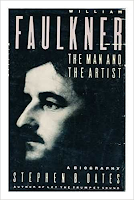
Faulkner: The Man and the Artist by Stephen B. Oates (1987)

This extremely readable biography is novelistic in approach and gives insight into the personal experiences and struggles that formed Faulkner into the man and writer he was. There was much in here I remembered about Faulkner - his troubled marriage, his drinking - and much that was new to me, such as his early support of civil rights and his long, complicated involvement in Hollywood. A great start to a study of the author and his work.

I'm including three novels as favorite reads this year. Each showcases that unique Faulknerian approach: rotating points of view and a sort of stream-of-consciousness omniscience. And yet. The aspect that surprised me the most during my summer reading project was how different each novel was, even while being unmistakably Faulknerian. Each is a masterpiece, in my opinion. They are:

The Sound and the Fury (1929)

As I Lay Dying (1930)

Light in August (1932)

I've linked each one to my original commentary. And now, the rest of my favorite reads for 2022.


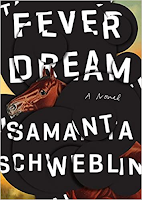
Fever Dream by Samanta Schweblin (2017)

Speaking of points of view, this slim novel will keep you guessing about who to believe and about the nature of reality itself. This haunting story about a summer vacation gone terribly wrong poses many questions about parenting, humanity's plundering of the earth, and the limits of our minds. It's compulsively readable and at times, downright scary. I've never read anything like it, and the 2021 movie adaptation (on Netflix) stays true to the tone and effect of the novel as well.


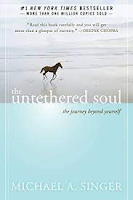
The Untethered Soul by Michael A. Singer (2007)

If you've done any work on yourself, maybe you've come to certain realizations about the weights and burdens you're carrying. Great! But how do you begin to unravel and release them? This bestselling guide to personal growth will be familiar to many. This was my first reading, but it's a book I'm certain I'll read again. The focus is on practical change, how to "free yourself from the habitual thoughts, emotions, and energy patterns that limit your consciousness." If this sounds appealing to you, give it a read. The ideas are succinctly and clearly explained, and yet will lead you to further thought and exploration. 


Flower, Grand, First by Gustavo Hernandez (2021)

Named for prominent streets in Santa Ana where the poet lives, the poems in this debut collection are contemplations about immigration, family, loss, and sexuality. Born in Jalisco, Mexico, Gus immigrated to the United States in the 1980s with his family, and his search for that birthplace and the family left behind were main inspirations. A evocative and heart-searing collection, brilliantly written. I was lucky to have the author join me for a chat about creativity and his writing, which you can view here. 


That's the list! These are my only 5-star reads for the year. But...to round out the number to an even 10, I give you three honorable mentions.


If on a winter's night a traveler by Italo Calvino (1979)

The experimental novel is, like Fever Dream, unlike anything you've read before. It's a postmodernist classic, a frame story about a reader trying to read a book called, well, If on a winter's night a traveler. It's about reading, and writing, and perspective, and how to experience storytelling, and relationships, and much more. The only reason I wouldn't give it a full five stars is because I felt that at some point, the ambitious structure and method took it slightly off the rails. 


The Best American Poetry 2021 by David Lehman (series editor) and Tracey K. Smith (guest editor)

Want to read more poetry? These anthologies are a great way to wade in. Of course, any anthology will include a wide range of writing and not all of it will be your cup of tea. That's why it's difficult to give the top rating to an anthology. But this one is very good, and now you can find the 2022 version as well.

Love by Hanne Ørstavik (2018)

Often there's a certain, raw directness about Scandinavian literature that I truly love. Authors like Fredrik Backman and Karl Ove Knausgaard have found their way into wide circulation, and personally, I anxiously await any translation of the work by one of my favorites, Per Petterson. As I write this, I'm wondering if this region should be a focus for my summer reading project...hm. 

This novel, Love, returns us to the beginning of this list, and the discussion of point of view. This slim tale tells about a day in the life of a single mother and her son. The narrative switches back and forth between their perspectives, in ways that will surprise and intrigue. The overall effect is a binding one, keeping this story taut around its mood and theme.

As always, I pay special attention to end-of-year reading lists, and would love to hear about your favorites of 2022, as well. Happy New Year to all.

Thursday, August 18, 2022

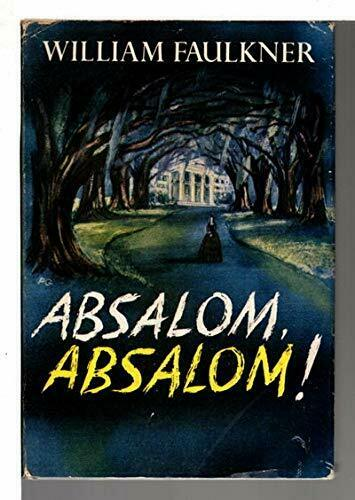
Summer of Faulkner: Absalom, Absalom!


My final read for my Summer of Faulkner is one a panel of judges in 2009 called the best Southern novel of all time (one scholar called it “the only serious rival to Melville’s Moby-Dick as the great American novel”—and well, I hated that book so I call into question this entire panel.) But I do get that Absalom, Absalom! explores the complex structure of the South—class, race, tradition—in an notably comprehensive way.

The novel tells the story of the rise and (because it’s Faulkner) inevitable fall of Thomas Sutpen, a white man who starts out poor with ambitions of power and wealth. He lives a complicated life, with past indiscretions casting shadows on his present circumstances. And his prior sins come back to haunt not only him, but his children. The whole thing is like a Shakespearean tragedy, if I’m being honest, with twists and violence and no way to a happy ending for, really, anyone.

Like the other novels I read this summer, Absalom, Absalom! (titled after the Biblical story of King David and his wayward son) addresses the decline of plantation culture, the evils of slavery, and sexual misconduct. And the novel is often lauded for its method of—you guessed it, multiple narrators. But for me, this time the method was a problem. Every narrator is both reliable and unreliable to some degree—the point being that this is how history is relayed. Sutpen’s “story” is recounted in flashbacks narrated by Quentin Compson, who got his information from a variety of sources/other narrators. There are layers upon layers as to what is “true.” And for me, the storytelling method was too cumbersome, too convoluted, and in the end, weighed down the overall effect.

Who knows—maybe I have Faulkner fatigue. I’ll allow that I didn’t read this last novel on a vacation but rather, during my regular, busy life. At times, it was a struggle to read (and don’t get me started on the almost-forty consecutive pages of italics in the middle of the book). Of course, it’s still Faulkner and there were many moments of brilliance and enough to keep me plodding along. Perhaps I’ll file Absalom, Absalom! in the “Give Another Chance” column, for sometime down the road.

And that’s a wrap on my Summer of Faulkner. Usually, I have some idea of what I’d like to do for the next summer, but I haven't really considered. I may do another author—I liked immersing myself in a single writer’s voice. Or maybe some other theme will hit me. In the meantime, I don't think I'm finished with Faulkner. I intend to read a few more over the non-summer months. He really is an incomparable writer.

Thursday, July 28, 2022

Summer of Faulkner: Light in August


Light in August begins like this:

“Sitting beside the road, watching the wagon mount the hill toward her, Lena thinks, ‘I have come from Alabama : a fur piece. All the way from Alabama a-walking.’"

and it ends like this:

“’My, my. A body does get around. Here we aint been coming from Alabama but two months, and now it’s already Tennessee.’”

The novel covers this short period during which Lena Grove finds herself in Jefferson, Mississippi, where she’s come to seek the father of her unborn child, Lucas Burch, a man who promised to send for her and didn’t.

Lena is a sympathetic character from the start, because of her situation and gumption, and because of her naivete in believing that somewhere, Burch will be waiting with the house and marriage she thinks he promised.

But Lena Grove isn’t the main character of Faulkner’s seventh novel published in 1932; one of the masterful things about the author’s method in Light in August is the alternating points of view. It’s a common, Faulknerian technique and yet, he seems to go about it in a unique way for each novel. Here, an alternating omniscience allows us into the minds of several of the characters, but often a new, periphery character is introduced at a particular moment as if to lend a degree of objectivity. In this way, the points of view contribute to the furthering of plot, while also lending depth to the themes of the book. I don't even know if I'm describing this well. A simple way to say it is that everything in this book is doing several things at once. Everything. It's truly masterful, a novel I could read over and over, I believe, and find new satisfactions each time.

We follow young, pregnant Lena into Jefferson much like a camera follows a subject. We meet other characters, each, like her, carrying some burden from the past. Reverend Hightower spent a childhood obsessed with his grandfather, a Civil War hero, and was ousted from his church position after a personal tragedy. Byron Bunch maintains a friendship with the reverend but is otherwise solitary and isolated until Lena’s arrival. Joanna Burden is a spinster whose family has a long history of anti-slavery activism and intermixing with blacks. And because one of Faulkner’s primary preoccupations in the novel is the relationship between and status for both whites and blacks in the South—well, it makes perfect sense that Joanna, with her confusion about her place among the races, becomes involved with our main character, Joe Christmas, a light-skinned man who has lived as both white and black at certain times of his life.

The characterization of Joe Christmas is nuanced and deep; he’s an orphan who suffers abuse and alienation throughout his childhood and becomes a drifter. I think one of the most impressive things about Faulkner’s drawing of this character is that even when Christmas becomes more and more corrupted and driven to terrible acts, we still feel sympathetic. Because of his violent upbringing and the lack of a mother, Christmas’s feelings for and about women are convoluted, his feelings about race, the same. He has never been allowed any sort of peace and when he finds it in short spells, he sabotages and destroys. On the race issue, never fitting in completely, he lives his life ready to fight.

“Now and then he could see them: heads in silhouette, a white blurred garmented shape; on a lighted veranda four people sat about a card table, the white faces intent and sharp in the low light, the bare arms of the women glaring smooth and white above the trivial cards. ‘That’s all I wanted,” he thought. ‘That dont seem like a whole lot to ask.’”

Note the repetition of the word "white" in that passage. It should be noted that in addition to an intricate plot and a cast of memorable characters, Light in August contains some of the best prose I’ve read on this Faulkner journey. Like this, our first glimpse of five-year-old Joe Christmas:

“Memory believes before knowing remembers. Believes longer than recollects, longer than knowing even wonders. Knows remembers believes a corridor in a big long garbled cold echoing building of dark red brick sootbleakened by more chimneys than its own, set in a grassless cinderstrewnpacked compound surrounded by smoking factory purlieus and enclosed by a ten foot steel-and-wire fence like a penitentiary or a zoo, where in random erratic surges, with sparrowlike childtrebling, orphans in identical and uniform blue denim in and out of remembering but in knowing constant as the bleak walls, the bleak windows where in rain soot from the yearly adjacenting chimneys streaked like black tears.”

I mean. Could the story of Joe Christmas have gone any way but tragically?

For each, well-drawn character, the past guides the present, and the plot of Light in August reveals, through twists and turns, all of the connections between these complex people. As is the case with the other novels I’ve read this summer, Faulkner has something to say about the choices for women and sexuality, about the lasting effect of slavery and racial violence and injustice, and about the South’s rich history and traditions. But race is perhaps the major consideration of the novel and about that, he reflects the devastation but offers no answers or resolution. It’s left for the characters to trudge forward, as Lena continues her journey through the South.

I remembered this book as a favorite from when I read it over twenty years ago; it’s my favorite of the books I’ve read this go-round.

"As soon as we express something, we devalue it strangely. We believe ourselves to have dived down into the depths of the abyss, and when we once again reach the surface, the drops of water on our pale fingertips no longer resemble the ocean from which they came...Nevertheless, the treasure shimmers in the darkness unchanged." ---Franz Kafka