Showing posts with label Catherynne M. Valente. Show all posts

Tuesday, August 17, 2021

Summer of Houses: Deathless


      You enter here, in helmet and greatcoat,
Chasing after her, without a mask.
You, Ivanushka of the old tales,
What ails you today?
So much bitterness in your every word
So much darkness in your love
And why does this stream of blood
Disturb the petal of your cheek?
                        -          Anna Akhmatova

Throughout her novel, Deathless, Catherynne M. Valente sprinkles excerpts from poems by the great Russan poet, Anna Akhmatova. One of the best known and most prolific of Russian writers, Akhmatova lived from 1889 to 1966, experiencing both prerevolutionary and Soviet Russia. She writes here about a stock character in Russian folklore, Ivanushka. A simpleminded but lucky young man, Ivanushka is described as amiable, with blue eyes. The details of his family and station vary from tale to tale, but he is always portrayed as someone who leads with his heart over his head. He’s naïve but kind, sometimes considered a fool but often misjudged by those around him. He’s not always what he seems to be. 

I said in an earlier post that this novel is perhaps the biggest stretch for my summer reading theme: houses. Yes, there’s a house, and it makes somewhat of an impression. Deathless opens with this:

“In a city by the sea which was once called St. Petersburg, then Petrograd, then Leningrad, then, much later, St. Petersburg again, there stood a long, thin house on a long, thin street. By the long, thin window, a child in a pale blue dress and pale green slippers waited for a bird to marry her.”

Well, actually, the novel begins with a short scene in which a young boy is questioned and then released by a pair of military officers. He’s only eleven, but he’s accused of desertion. Three “skinny, molting creatures” (birds) watch from a nearby branch. This scene is followed by the first of the Akhmatova quotes, a poem about a faceless visitor, a riddle, and a wanderer in darkness. My point is, from the start, the stage is set for everything this remarkable novel aims to do: say something about the history of Russia, particularly throughout the twentieth century, recycle certain characters, tropes and stories from the vast landscape of Russian folklore, and tell a lyrically moody, visceral and exciting tale. And like the folk staple Ivanushka, things are not always what they seem. 

The novel focuses on Marya Morevna, the girl in the pale blue dress. For years, she has watched as her sisters were claimed for marriage by men who arrive as birds but transform into handsome young men before whisking away their brides. And so, she waits for her bird. When he comes, he’s handsome, all right, but his name is Koschei the Deathless, another figure from Russian folklore whose main characteristic is his inability to be killed.

And the house? The one Marya has been living in, before leaving with Koschei, has a tendency to expand and there are little domovoi, or house-goblins, about. And once she escapes with her bird-suitor to the Isle of Buyan, there are other strange features in the new world she inhabits, other strange, house phenomena:

“The main thing was the ruin of her house, like film laid on top of other film, so that she could look at a wall and see not only the wall but Svetlana Tikhonovna and her mother arguing over laundry in front of it, and Zemlehyed pawing at it, and the skin of a Buyan wall, so far from her. Everywhere her vision doubled and trebled, and her head sagged with the weight of it. Everything kept occurring all at once, each thing on top of the last.”

This novel draws from Russian folklore, with its dark imagery and themes. It’s not a book for children. I will admit that from time to time, the book was a riddle, as promised by Valente in that early Akhmatova poem. I had some trouble following certain relationships and twists of plot. It felt like things were happening, all at once, each thing on top of the last. And although the novel is strong in folkloric roots and fantastical elements, Valente draws complex characters; the development of Marya’s character was probably my favorite aspect. She changes from an innocent girl to Koschei’s frightened concubine and eventually, his wife. A major part of the story here is the sexy and ultimately, tragic love affair between them. The book has been compared to Bulgakov’s The Master and Margarita, and at the time of its release in 2011, the AV Club said “Deathless does for Russia what Susanna Clarke’s Jonathan Strange & Mr Norell does for England.” I can see where the book fits somewhere between these two, and yet, is something entirely different and unique, too.

As we run out of summer days, one book remains for my Summer of Houses reading project. I’ll be diving into Sarah M. Broom’s memoir, The Yellow House, next. I do love a book with a map at the start, and Broom starts hers with an outline of New Orleans, where the notable house she writes about lives.

Tuesday, June 1, 2021

Summer Reading Project, 2021


Recently, I moved to a new home. Throughout my life, I have lived in close to two dozen dwellings; this latest is notable for being the first home purchased on my own. Houses matter quite a bit to some people, don’t they? Our sense of success and achievement, our identity, even a sense of inner peace—all can be influenced by the particular four walls we find ourselves within. To me, moving isn’t the dramatic affair it is for many. As I get older, the mechanics of it certainly have become more arduous but I’ve always enjoyed a new perspective, new surroundings. Having lived in so many homes, I find that some stand out and others fade from memory, and this isn’t always connected to the length of time spent in the place. Some homes have an unforgettable quality that plants them firmly in the consciousness, some are more beloved because of the events that occurred while living there, and some take on a dark hue for the same reason.


For some fiction writers, a story begins with setting, and houses often become a starting point. In creative writing, houses can be an important element, rising up to assert their presence alongside other, human characters. Perhaps you’re already thinking of a book that features a house as an ominous, reassuring, steadfast, or other type of entity. Here are some I won’t be reading this summer, either because I’ve already read them, or because I chose otherwise:


The House of the Spirits by Isabel Allende

A Man Called Ove by Fredrik Backman

The Secret Garden by Frances Hodgson Burnett

Room by Emma Donoghue

House of Sand and Fog by Andre Dubus III

Rebecca by Daphne Du Maurier

The Great Gatsby by F. Scott Fitzgerald

The Turner House by Angela Flournoy

The Past by Tessa Hadley

The Remains of the Day by Kazuo Ishiguro

We Have Always Lived in the Castle by Shirley Jackson

The Hundred-Year House by Rebecca Makkai

Housekeeping by Marilynne Robinson

The Door by Magda Szabo


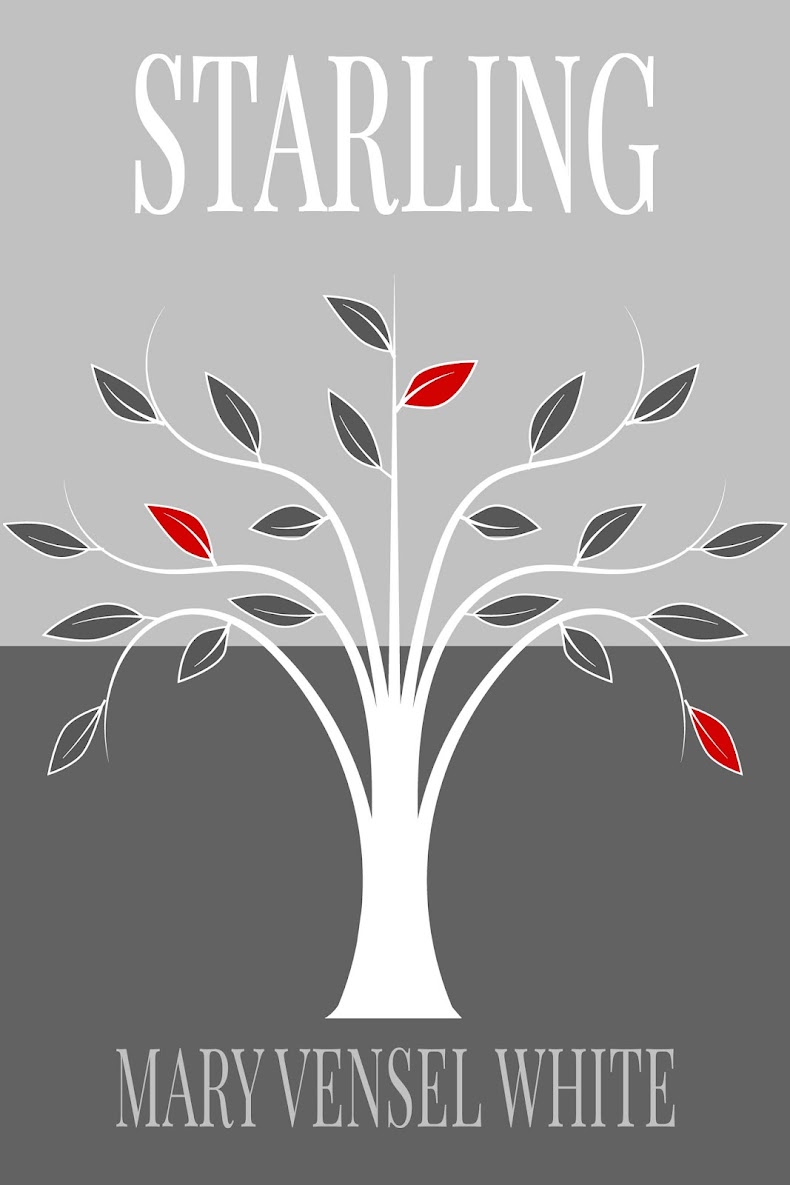
Yes, I know there are many more! These are some that were mentioned or occurred to me. Please do comment with your favorite books that feature a notable house. My first novel would certainly fall into this category, that story about a young couple sorting through the belongings inside an old, country house. And certainly my next novel, Starling (coming soon!), has much to say about homes and how they can comfort and confine.


What is my purpose for ruminating about houses in books? Faithful readers of this blog know that over the summer months, I become happily obsessed with a theme. Two years ago, I read books all about trees and last summer while we were shut down, I read books connected to France in some way. For 2021, my reading project will be Summer of Houses, books that feature a house as a key element. I have chosen four, which I’ll read in the order shown. As always, I welcome readers who would like to join in! My choices are:


The Haunting of Hill House by Shirley Jackson

It could be said that my entire summer theme started here, with this well-known book I’ve never read! You may know it from the 2018 Netflix series, but if you don’t know the novel, join me in reading this classic written by a force of nature, Shirley Jackson. Published in 1959, it’s the story of four protagonists who arrive at Hill House, seeking evidence of its haunted nature. They get that, and much more.


White is for Witching by Helen Oyeyemi

The house in question in this 2009 novel is Silver House, a family home now converted to a bed-and-breakfast in Dover, England. The house has always been occupied by generations of Silver women like Miranda, who begins to suffer strange ailments after the death of her mother. The book is hailed as “boldly original, terrifying, and elegant,” and its author is often compared to Shirley Jackson so it’s the perfect follow-up to my first choice.


Deathless by Catherynne M. Valente

This book is a less obvious choice for my theme, but one that jumped out to me when scouring lists. Marya Morevna watches from the window of her upper middle-class home in Saint Petersburg as suitors arrive for her sisters. But the suitors are first birds who transform before her eyes into men. This 2011 novel combines the Russian fairy tale, "The Death of Koschei the Deathless," with the events and aftermath of the Russian Revolution, in what the publisher calls “a collision of magical history and actual history, of revolution and mythology, of love and death.” I’m very excited about this read.


The Yellow House by Sarah M. Broom

This memoir, winner of the 2019 National Book Award in Nonfiction, is ambitious in its scope: it spans one hundred years of the author’s family history and relationship to their home in New Orleans. The Yellow House magnifies a segment of the city unseen in tourist guides “to demonstrate how enduring drives of clan, pride, and familial love resist and defy erasure” through natural disasters, class inequality, and other challenges.


As always, I’ll be posting to report on my progress. In the meantime, enjoy your summer, your own reading choices for the warmer months, and the comfort of your current dwelling.

"As soon as we express something, we devalue it strangely. We believe ourselves to have dived down into the depths of the abyss, and when we once again reach the surface, the drops of water on our pale fingertips no longer resemble the ocean from which they came...Nevertheless, the treasure shimmers in the darkness unchanged." ---Franz Kafka